| Standard LV PFC Capacitor | Stable commercial buildings, motors, pumps, fans, and transformers with limited nonlinear loads | Commonly 400–480 V AC; other ratings are available | Low harmonic distortion; generally suitable when voltage and current distortion are controlled | Simple construction, lower initial cost, compact design, and effective reactive-power compensation | Can amplify harmonic resonance if connected to a system with significant nonlinear loads | Best for clean networks |
| Heavy-Duty Capacitor | Industrial feeders with frequent switching, variable loading, or demanding operating cycles | Selected above the nominal line voltage to provide additional electrical stress margin | Low to moderate harmonic distortion | Improved thermal and electrical endurance compared with a basic capacitor design | Higher cost and increased reactive-power output at the selected operating voltage | Suitable for demanding duty |
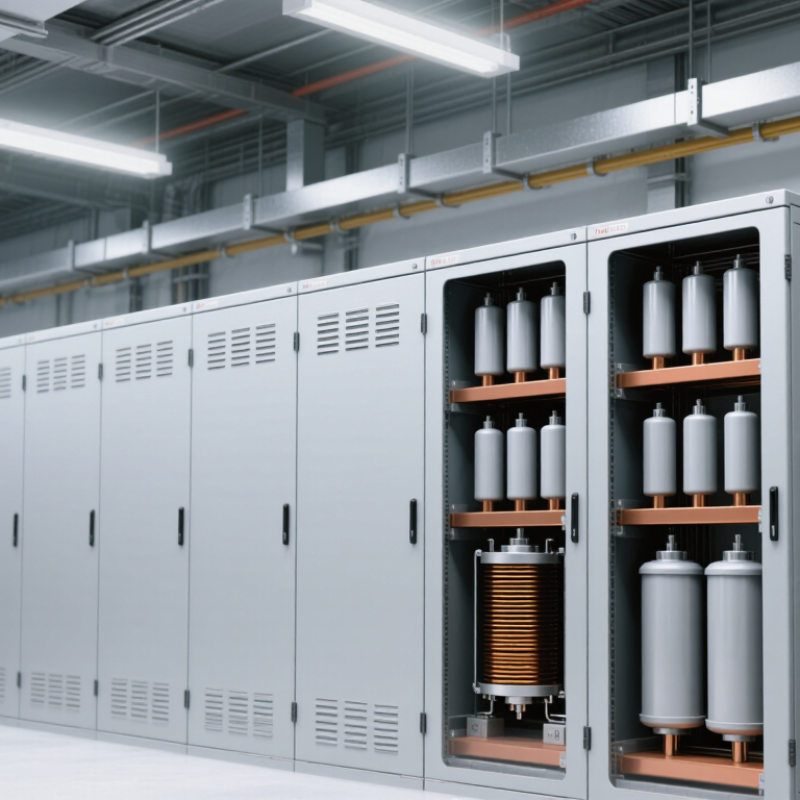
| Detuned PFC Capacitor Bank | Facilities containing variable-frequency drives, UPS systems, rectifiers, switched-mode power supplies, or LED drivers | Commonly used on 400–480 V AC systems with a series reactor | Moderate to high harmonic content | Reduces the risk of parallel resonance and helps limit harmonic current flowing into the capacitor bank | Does not remove harmonics; the reactor causes a small voltage drop and reduces available kVAr | Preferred for harmonic-rich networks |
| Tuned Passive Filter Bank | Systems requiring reactive-power compensation together with targeted filtering of selected harmonic orders | Designed for the actual system voltage, frequency, short-circuit level, and harmonic spectrum | Specific dominant harmonics, such as the 5th or 7th, depending on the design | Can provide power-factor correction and targeted harmonic reduction in one installation | Requires detailed engineering; mistuning, detuning, or network changes can affect performance | Application-specific |
| Automatic Switched Capacitor Bank | Loads with changing reactive demand throughout the day, including commercial and industrial distribution systems | Low-voltage or medium-voltage systems, subject to the bank design | Depends on the capacitor steps and whether detuned reactors are included | Maintains power factor over changing loads by switching capacitor steps through a controller | Contactors or switching devices require maintenance; excessive switching can shorten component life | Best for variable loads |
| Fixed Capacitor Bank | Constant-load motors, transformers, and feeders with predictable reactive-power demand | Selected to match the actual system voltage and operating frequency | Should be used only after checking resonance and harmonic conditions | Low complexity, low maintenance, and continuous compensation for a stable load | May overcorrect the system during light-load periods and can cause leading power factor | Suitable for steady loads |
| Medium-Voltage PFC Capacitor | Utility substations, industrial distribution networks, and large motor installations | Typically above 1 kV AC; the exact rating depends on the distribution system | Requires system-specific harmonic and insulation coordination analysis | Compensates reactive power close to large medium-voltage loads and can reduce feeder current | Higher insulation, protection, clearance, and switching requirements than low-voltage equipment | For medium-voltage systems |



 08045479132
 Send Inquiry

 Send Inquiry
 Send SMS
