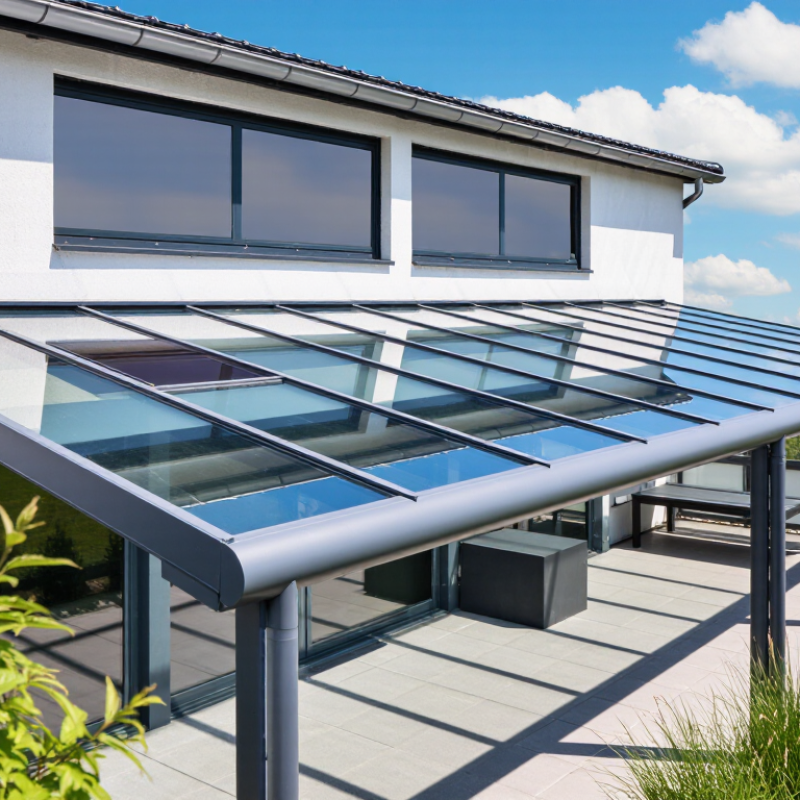
| Fixed laminated glass roof | Moderate climates, sheltered patios, year-round daylight areas | $450–$900
Installed; structural upgrades may cost extra | Commonly 8.76–13.52 mm laminated safety glass; low-emissivity coating recommended | 3–7 working days for a typical 20–30 m² patio | 25–40 years for the glazing; seals and gaskets may require earlier replacement | Clean glass 2–4 times per year; inspect seals, drainage channels, and fasteners annually | Good daylight; solar-control coating is important in hot climates; insulation varies by glass build-up | Usually the lowest-complexity glass option; strong balance between daylight, durability, and initial cost |
| Double-glazed insulated roof | Cold climates, four-season patios, spaces requiring improved comfort | $650–$1,200
Higher frame and installation requirements | Insulating glass unit, commonly two panes with a sealed air or inert-gas cavity; safety glass required overhead | 5–10 working days, depending on roof size and structural access | 25–35 years for the glass unit; perimeter seals may need replacement during the life of the system | Clean 2–4 times per year; inspect condensation, edge seals, flashings, and drainage annually | Better winter insulation and reduced interior condensation risk than single glazing; still needs solar control in hot regions | Higher upfront cost can be justified where the patio is used frequently in cold seasons or energy performance matters |
| Solar-control glass roof | Hot, sunny, tropical, subtropical, and high-altitude locations | $550–$1,050
Price depends on coating and frame system | Safety glass with a solar-control coating; low-emissivity coating may be combined with solar control | 4–8 working days for a standard residential installation | 25–40 years when the coating, edge seals, and drainage are correctly specified | Clean 3–6 times per year in dusty, coastal, or pollen-heavy locations; inspect coating and seals | Reduces solar heat gain and glare; visible-light transmission must be selected to avoid an overly dark interior | Can reduce cooling demand and improve usability, but coating selection should match orientation and local climate |
| Retractable glazed roof system | Premium outdoor rooms, variable weather, restaurants, and flexible living areas | $900–$1,800+
Motorization and controls are major cost drivers | Safety glazing integrated with engineered moving panels, tracks, motors, sensors, and drainage | 7–14 working days, excluding electrical work and complex structural preparation | 20–30 years for the main structure; motors, controls, wheels, and seals may need periodic replacement | Clean 3–6 times per year; lubricate or service moving parts as specified; inspect sensors and drainage twice yearly | Excellent ventilation and seasonal flexibility; closed-roof insulation depends heavily on the glazing and frame design | Highest comfort and flexibility, but lifecycle cost is greater because mechanical components require service |
| Frameless or minimally framed glass roof | Modern architectural projects where uninterrupted views are the priority | $700–$1,400
Engineering and specialist installation can be significant | Engineered laminated or insulating safety glass with concealed channels and structural supports | 6–12 working days, subject to precise measurements and specialist access | 25–40 years for properly engineered glazing and support components | Clean 3–6 times per year; inspect concealed drainage, joints, sealants, and movement points annually | Excellent daylight and visual openness; thermal performance depends on glass thickness, coatings, and air sealing | Strong aesthetic value, but tolerances, drainage design, and future sealant access must be planned carefully |
| Glass roof with insulated opaque panels | Mixed climates, large roof areas, glare-sensitive spaces, and heat-management projects | $500–$1,000
Usually less glazing area than a fully transparent roof | Combination of safety glass sections and insulated solid roof panels | 4–9 working days for a typical medium-sized patio | 25–40 years for the roof structure; panel finishes and seals may require periodic renewal | Clean glazing 2–4 times per year; clear leaves from gutters and inspect panel joints annually | Better shading and heat control than a fully glazed roof; daylight is more limited but easier to manage | Often provides the best cost-to-comfort ratio where full transparency is unnecessary |



 08045479132
 Send Inquiry

 Send Inquiry
 Send SMS