2026 Best Omni Directional Wheel for Global Buyers
Choosing the right Omni Directional Wheel can determine how smoothly a mobile robot, conveyor, or industrial platform moves.
Global buyers face more than a simple size decision. Floor conditions, payload, speed, noise, turning precision, and maintenance all affect real performance. A wheel that glides quietly on polished concrete may struggle on dusty warehouse flooring. Small rollers can also collect debris near loading doors.
This 2026 guide examines practical options for international purchasing. It considers wheel diameter, load distribution, roller materials, hub construction, and installation requirements. It also reviews supplier experience, quality control, testing records, and after-sales support. Reliable manufacturers should provide measurable specifications, not vague promises. Clear drawings and sample testing matter.
Details matter most.
Buyers should compare static and dynamic loads carefully. A platform carrying batteries may create uneven pressure during sharp turns. Temperature, humidity, and daily operating hours can change service life. Polyurethane rollers may reduce noise, while steel components can support harsher working environments. However, no material performs perfectly everywhere.
We also acknowledge an important limitation. Catalog figures rarely reproduce every warehouse condition. Even a well-rated product may need adjustment after field testing. That is not failure; it is useful evidence. Trial installation, operator feedback, and routine inspection can reveal problems early.
With a balanced approach, buyers can identify an Omni Directional Wheel that matches their equipment, operating environment, budget, and regional supply expectations. The strongest choice is not always the cheapest or largest. It is the one supported by verified data and practical experience.
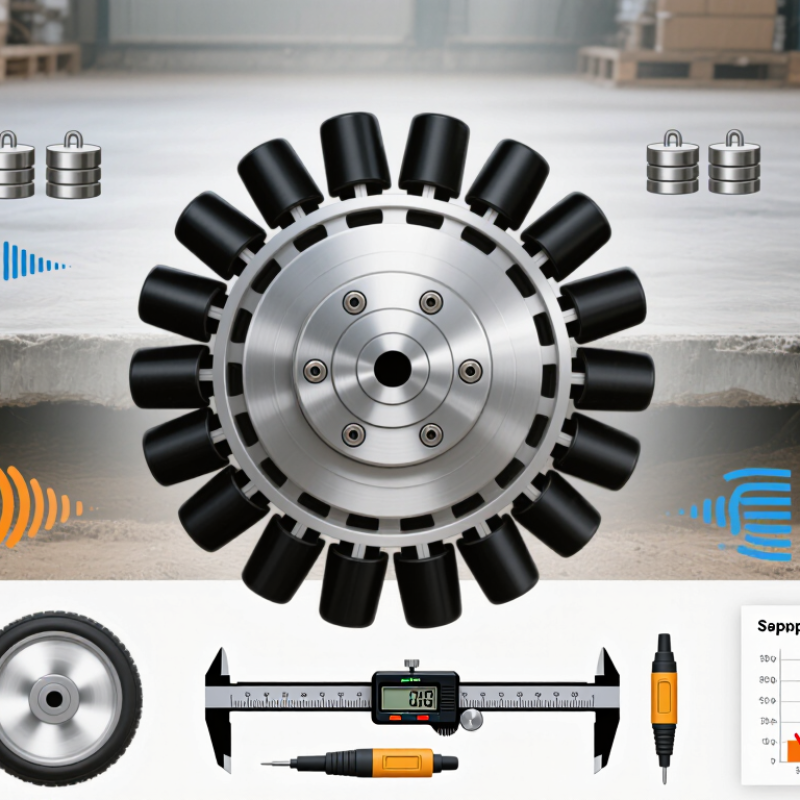
Omni Directional Wheels: Definition, Structure, and Core Operating Principles
Omni directional wheels are mechanical wheels that support movement in several directions. Unlike standard wheels, they use smaller rollers around the main wheel’s circumference. These rollers rotate freely and reduce sideways resistance. Each roller usually has an axis perpendicular to the wheel’s primary rotation axis.
The structure includes a central hub, axle, bearings, a supporting frame, and multiple perimeter rollers. Roller spacing affects vibration, load sharing, and movement smoothness. Small errors matter. When powered, the main wheel creates forward force, while the rollers permit lateral motion. A controller combines wheel speeds to produce straight, diagonal, or rotating movement. If wheel speeds are poorly matched, the platform may drift or shake.
For global buyers, selection should begin with load rating, roller material, wheel diameter, and floor conditions. Check rated load carefully. Test the real floor. Stated capacity can assume smooth surfaces, balanced loads, and low operating speeds. Warehouse dust, small gaps, or uneven concrete may reduce performance. In practice, calculations rarely match the first test perfectly. A wheel that looks suitable on paper may create unexpected noise or slipping. Buyers should request dimensional drawings, bearing details, tolerance data, and test conditions. Installation alignment also deserves attention, because a few millimeters of error can change the movement path.
Key Performance Criteria for Choosing the Best Wheel in 2026
Choosing an omnidirectional wheel in 2026 requires more than checking a catalog photograph. I evaluate load capacity under motion, not only static weight. A wheel carrying 300 kilograms may behave differently during sudden turns. Diameter matters too. Larger wheels cross small floor gaps more smoothly. Smaller wheels can reduce platform height. The right choice depends on payload, frame design, travel speed, and floor condition. Measure the complete system before ordering.
Traction and movement accuracy deserve close testing. I look for controlled sideways travel, stable rotation, and limited vibration at working speed. On polished concrete, excessive slip can leave marks and weaken positioning. On rough floors, soft contact elements may improve grip, but they can wear faster. Bearing quality, axle strength, and sealing affect service life in dusty areas. Ask for test reports, rated conditions, replacement guidance, and tolerance data. Clear documents support reliable purchasing across borders.
A practical trial should use the real payload, incline, turning cycle, and floor surface. Record noise, current demand, stopping distance, and visible wear after repeated runs. My early evaluations focused too heavily on maximum load. That was a mistake. Usable performance matters more than an impressive number. No wheel is perfect. Temperature, cleaning chemicals, and uneven assembly can change results. Leave a safety margin, inspect fasteners regularly, and confirm dimensions before production. Small details often decide whether movement feels precise or frustrating.
Global Buyer Guide to Materials, Standards, Pricing, and Suppliers
2026 Best Omni Directional Wheel for Global Buyers
Global Buyer Guide to Materials, Standards, Pricing, and Suppliers
Choosing the best omni directional wheel starts with the floor, not the catalog. Polyurethane rollers suit smooth factory floors and reduce marking. Nylon handles moisture better but may transmit more vibration. Steel offers strength, yet it can damage delicate surfaces. Check load capacity at the complete wheel assembly, not one roller.
The International Federation of Robotics reported 541,302 industrial robot installations worldwide in 2023. This growth increases demand for precise mobile platforms and dependable wheel components. For automated guided vehicles, buyers should review ISO 3691-4 requirements, especially braking, control, and operating-zone safety. ISO 9001 certification can support supplier consistency, but it does not guarantee wheel performance. Request test records for hardness, fatigue, noise, and lateral traction.
Pricing varies by diameter, material, bearing quality, machining, and order volume. As a practical purchasing reference, standard industrial wheels may cost about US$20–80 per unit, while customized assemblies can exceed US$150. Treat these figures as indicative. Freight and tooling can change the final cost sharply. Ask suppliers for samples, dimensional drawings, rated loads, and batch traceability. A polished datasheet is not enough. I would also test turning on the actual floor, because small gaps and dust often expose weaknesses that laboratory results miss.



 08045479132
 Send Inquiry

 Send Inquiry
 Send SMS