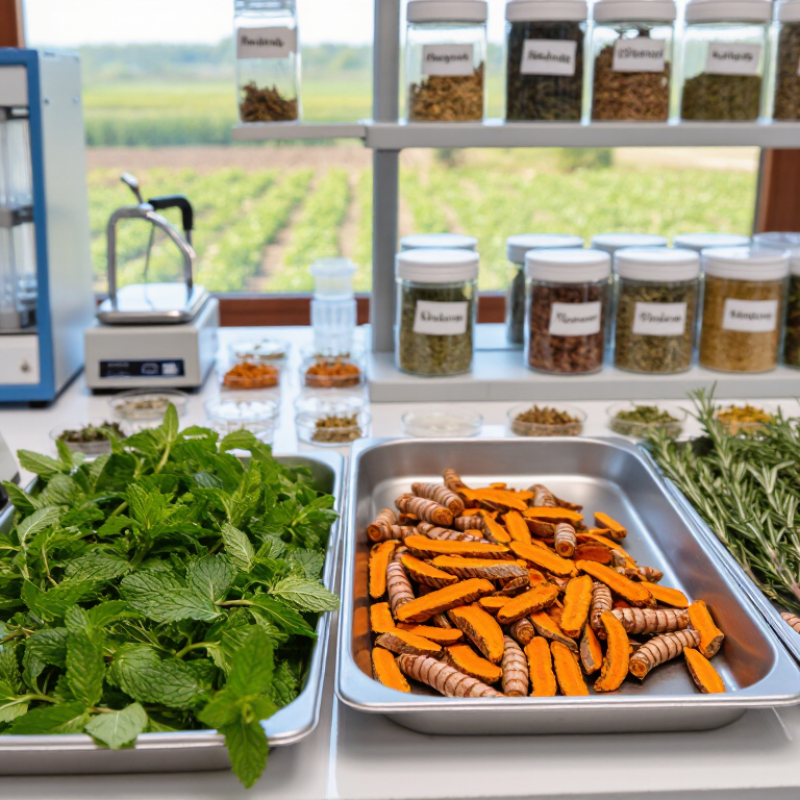
| Turmeric | Curcuma longa | Cleaned and dried rhizome; whole, sliced, or powdered | Bright yellow-orange color; characteristic aroma; high curcuminoid content; low starch adulteration; limited fibrous material | Usually ≤10% | Test for lead, cadmium, arsenic, mercury, pesticide residues, aflatoxins, Sudan dyes, and undeclared synthetic colorants | Botanical microscopy, HPTLC or HPLC fingerprinting, curcuminoid assay, moisture analysis, and multi-residue contaminant testing | Use food-grade moisture-barrier bags; protect from light, heat, humidity, and strong odors; store on pallets in a dry warehouse |
| Ginger | Zingiber officinale | Washed and dried rhizome; sliced, granulated, or powdered | Fresh, pungent aroma; pale cream to light tan appearance; low foreign matter; strong gingerol and shogaol fingerprint | Usually ≤10–12% | Check for microbial contamination, pesticide residues, heavy metals, aflatoxins, and excessive sulfur dioxide where applicable | Macroscopic examination, microscopy, HPTLC or HPLC profile, moisture and water-activity testing, microbiological analysis | Pack in sealed, food-grade liners; prevent moisture uptake and condensation; keep away from direct sunlight and volatile chemicals |
| Peppermint Leaf | Mentha × piperita | Dried leaves and flowering tops | Distinctive menthol aroma; green color; low stem content; characteristic essential-oil profile; minimal browning | Usually ≤12% | Evaluate pesticide residues, microbial counts, foreign plant material, heavy metals, and possible adulteration with other Mentha species | Botanical microscopy, essential-oil profile by GC-MS or GC-FID, moisture testing, sieve analysis, and microbiological testing | Use opaque or light-resistant packaging; avoid compression that damages leaves; store cool, dry, and away from odor contamination |
| Chamomile Flower | Matricaria chamomilla | Whole dried flower heads or cut flower material | Strong apple-like aroma; intact flower heads; bright yellow disc florets; low levels of stems, dust, and darkened material | Usually ≤12% | Screen for pesticide residues, microbial contamination, heavy metals, foreign flowers, and excessive insect damage | Botanical identification, microscopy, volatile-oil or marker-compound analysis, moisture testing, and microbial testing | Use breathable but protective inner liners; minimize crushing; protect from humidity, light, and prolonged heat exposure |
| Oregano | Origanum vulgare | Dried leaves and tender stems | Strong characteristic aroma; green to gray-green color; high volatile-oil quality; low stem and foreign-leaf content | Usually ≤12% | Check for adulteration with olive leaves or other plant material, pesticide residues, Salmonella, total microbial counts, and heavy metals | Microscopy, HPTLC or DNA-based identification where appropriate, essential-oil profiling, sieve analysis, and microbiological testing | Use sealed, food-grade packaging with oxygen and moisture protection; keep cool and dark to preserve volatile compounds |
| Ceylon Cinnamon | Cinnamomum verum | Quills, chips, or powdered bark | Sweet, delicate aroma; thin layered quills; low woody core; authentic species identity; naturally low coumarin compared with cassia types | Usually ≤12% | Confirm species identity; test coumarin level, pesticide residues, heavy metals, aflatoxins, and microbial quality | Macroscopic and microscopic examination, HPTLC or DNA authentication, coumarin analysis by HPLC, and contaminant testing | Use high-barrier packaging for powder; protect from humidity and light; maintain lot separation for traceability |
| Black Pepper | Piper nigrum | Whole dried peppercorns or ground fruit | Uniform dark color; characteristic pungency; high bulk density; low light berries, stalks, stones, and other foreign matter | Usually ≤12% | Test for Salmonella, aflatoxins, pesticide residues, heavy metals, mineral oil contamination, and non-pepper adulterants | Visual grading, microscopy, piperine assay, density and sieve tests, moisture and water-activity analysis, microbiological testing | Use clean, sealed, moisture-resistant bags; prevent exposure to high humidity; store away from chemicals and strong-smelling products |
| Rosemary Leaf | Salvia rosmarinus | Dried leaves and young leafy stems | Gray-green needle-like leaves; intense resinous aroma; low woody stem content; stable essential-oil profile | Usually ≤12% | Check pesticide residues, heavy metals, microbial counts, foreign plant material, and oxidation-related quality loss | Botanical microscopy, GC-MS or GC-FID essential-oil profiling, moisture testing, and microbiological analysis | Use light-protective, sealed packaging; limit oxygen exposure; store in a cool, dry environment to preserve aroma |
| Milk Thistle Seed | Silybum marianum | Ripe dried seeds, whole or milled | Correct seed morphology; clean and mature seeds; verified silymarin complex; low rancidity and low foreign matter | Usually ≤9% | Test for pesticide residues, heavy metals, aflatoxins, microbial contamination, and oil oxidation where the seed is milled | Macroscopic and microscopic identification, HPLC assay of silymarin-related compounds, moisture testing, peroxide-value testing when relevant | Use oxygen- and moisture-barrier packaging; protect milled material from heat and oxidation; apply strict lot traceability |
| Ashwagandha Root | Withania somnifera | Cleaned dried root, cut root, or root powder | Correct root anatomy; characteristic odor; verified withanolide fingerprint; low sand, soil, stem, and leaf contamination | Usually ≤10% | Screen for heavy metals, pesticide residues, aflatoxins, microbial contamination, and undeclared pharmaceutical or synthetic ingredients | Botanical microscopy, HPTLC or HPLC fingerprinting, withanolide analysis, moisture testing, and microbiological examination | Use sealed food- or pharmaceutical-grade liners; protect powder from humidity and cross-contamination; retain representative samples |



 08045479132
 Send Inquiry

 Send Inquiry
 Send SMS