| Nitrogen content | Fertilizer-grade urea normally contains approximately 46% nitrogen by mass. | Recent certificate of analysis, independent laboratory test, and product specification. | Confirms the product meets the buyer’s agronomic and regulatory requirements. | Pass only when the tested value meets the agreed specification. |
| Physical form | Supplier can consistently provide the contracted form, typically granular or prilled urea. | Product photographs, sieve analysis, particle-size range, and loading inspection report. | Particle size affects spreading performance, handling, dust generation, and blending compatibility. | Check whether the particle-size distribution matches the application and equipment. |
| Biuret level | Biuret is clearly stated and controlled according to the intended use; lower limits may be required for sensitive crops or foliar applications. | Batch-specific biuret result and the applicable national or customer specification. | Excessive biuret can create crop-safety concerns in certain application conditions. | Use the buyer’s crop and application requirements rather than a generic acceptance limit. |
| Moisture and caking control | Moisture is controlled to the agreed level, with suitable anti-caking or storage practices where specified. | Moisture test, storage procedure, warehouse photographs, and pre-shipment inspection results. | Moisture ingress may cause caking, poor flowability, handling losses, and application problems. | Review both laboratory results and the condition of packaging and storage facilities. |
| Supply capacity | Capacity is supported by documented production access, allocation, or verifiable trading arrangements. | Production or allocation letter, historical shipment records, stock report, and monthly availability schedule. | Reduces the risk of partial shipment, substitution, or missed planting-season delivery. | Compare promised volume with the supplier’s documented fulfillment history. |
| Export and regulatory compliance | Supplier understands destination-country fertilizer registration, import documentation, customs, and safety requirements. | Safety Data Sheet, certificate of origin, customs documents, export license where applicable, and regulatory declarations. | Incomplete documents can delay clearance or prevent lawful sale and distribution. | Verify requirements with the importing country’s competent authority before contracting. |
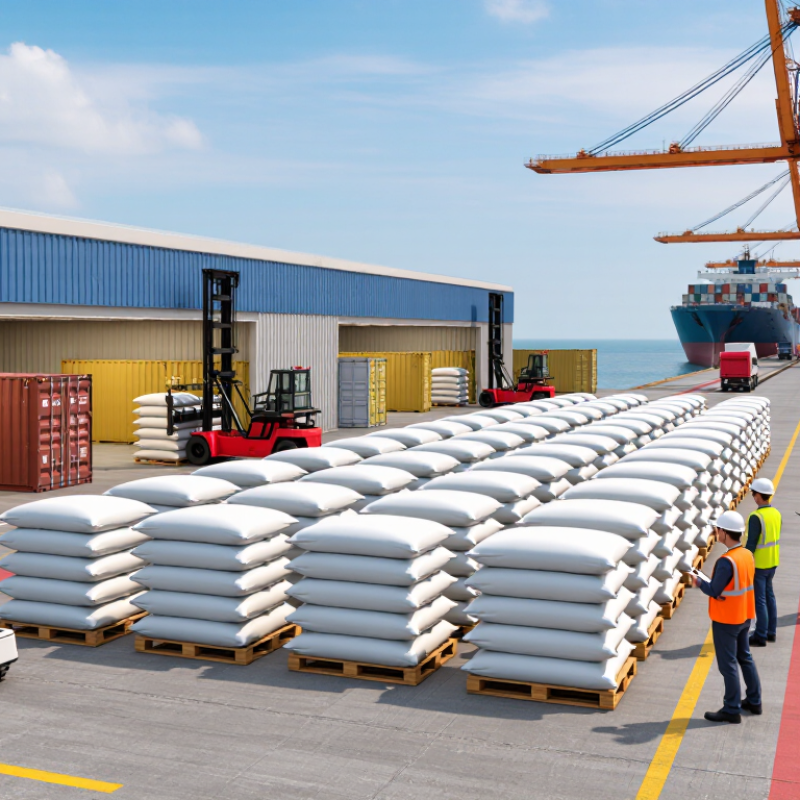
| Packaging and marking | Packaging options are clearly defined, such as bulk, standard bags, or flexible intermediate bulk containers, with agreed labeling. | Packaging specification, bag material details, net-weight tolerance, label artwork, and packing photos. | Correct packaging protects product quality and supports customs, warehouse, and retail handling. | Confirm bag size, palletization, labeling language, and resistance to transport conditions. |
| Quality inspection | Supplier accepts independent inspection before shipment and provides batch-level documentation. | Inspection appointment, sampling procedure, laboratory accreditation details, and final inspection certificate. | Independent verification reduces disputes over quality, quantity, and loading condition. | Make inspection a contractual condition for first shipments and high-value transactions. |
| Logistics capability | Supplier can provide a realistic shipping schedule, port plan, loading method, and Incoterms® 2020 quotation. | Commercial offer, pro forma invoice, vessel or container plan, port details, and demurrage responsibilities. | Clear logistics terms help buyers compare landed cost and manage delivery risk. | Evaluate total landed cost, not only the quoted product price. |
| Payment security | Payment terms are transparent and proportionate to the transaction risk, with verifiable banking information. | Signed sales contract, company registration, bank confirmation, trade references, and agreed documentary controls. | Reduces exposure to fraud, unauthorized intermediaries, and non-delivery. | Use enhanced due diligence for unfamiliar counterparties and unusual payment requests. |
| Price transparency | Quotation identifies product basis, currency, quantity, delivery term, validity period, and included charges. | Detailed quotation, freight assumptions, insurance terms, taxes, port charges, and validity date. | Prevents apparently low offers from becoming expensive after freight and local charges. | Compare equivalent Incoterms® and delivery points on a landed-cost basis. |
| Traceability and after-sales support | Each shipment can be traced by lot or batch, and the supplier has a documented complaint-resolution process. | Batch numbering system, retention-sample policy, complaint procedure, response contacts, and replacement or claim terms. | Supports recalls, quality investigations, and resolution of delivery or specification disputes. | Prefer suppliers with written service-level commitments and accessible technical contacts. |



 08045479132
 Send Inquiry

 Send Inquiry
 Send SMS