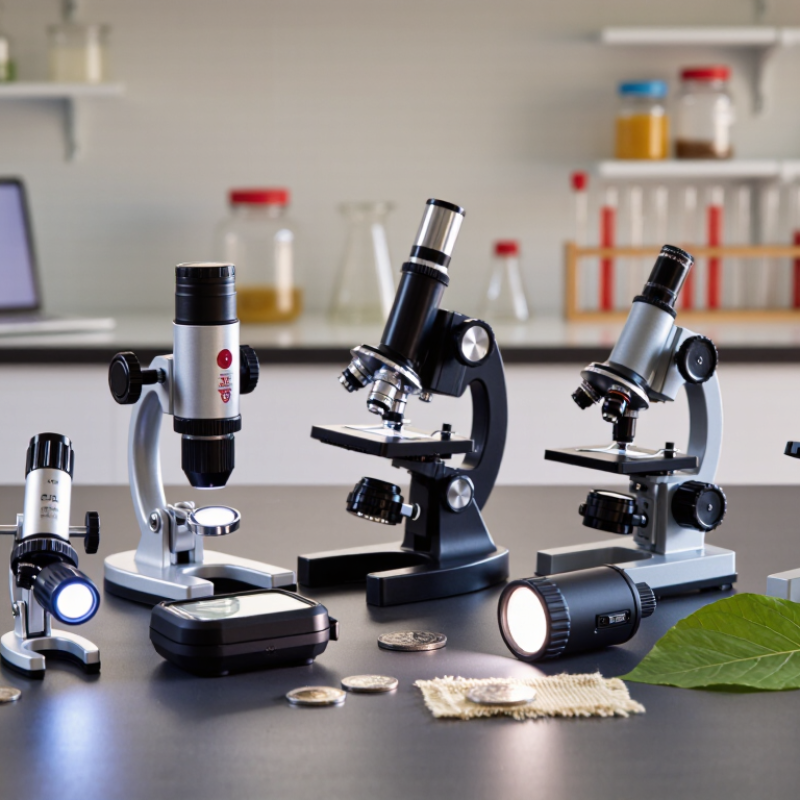
| 1. Pocket monocular microscope |
About 20×–60×; some models offer higher settings |
Direct eyepiece viewing; usually built-in LED illumination and battery power |
Very high; small enough for a pocket or field kit |
Leaves, insects, fabric, minerals, and quick outdoor inspections |
Small viewing area and limited detail at the highest magnification |
Comfortable focus wheel, adjustable light, sturdy housing, and a clearly stated optical magnification |
| 2. Handheld digital microscope |
Commonly advertised around 10×–200×; useful detail depends on optics, sensor, and working distance |
Camera image displayed on a connected computer, tablet, or phone; often LED-lit |
High; the handheld unit is compact, but a host device may be needed |
Coins, circuit boards, labels, plant surfaces, and image capture |
Digital enlargement can make the image look bigger without revealing more detail |
Image resolution, adjustable illumination, focus range, stable stand, and compatibility with the intended device |
| 3. Portable microscope with built-in screen |
Often offers several digital zoom settings; optical detail varies by design |
Live view on an integrated LCD; rechargeable battery is common |
High; no separate computer is required for basic viewing |
Field inspections, demonstrations, and users who want a self-contained display |
Screen size and battery capacity can limit extended use; digital zoom is not optical resolution |
Screen brightness, battery life, image storage, simple controls, and a secure focus stand |
| 4. Portable compound microscope |
Typically 40×–400× with common school-style objective and eyepiece combinations |
Eyepiece viewing; transmitted LED light illuminates thin samples from below |
Moderate; compact versions are available, but they are bulkier than pocket scopes |
Prepared slides, cells, thin plant sections, and classroom biology |
Needs thin, transparent samples and careful focusing; less suitable for whole objects |
Achromatic objectives, a mechanical stage, coarse and fine focus, and rechargeable or replaceable power |
| 5. Portable stereo microscope |
Usually about 10×–40× |
Binocular viewing creates a three-dimensional view; reflected light illuminates solid objects |
Moderate to low; generally larger and heavier than handheld options |
Insects, rocks, small mechanical parts, and hands-on repair work |
Lower magnification than a compound microscope and less convenient to carry |
Working distance, comfortable binocular head, stable base, and adjustable top illumination |
| 6. Smartphone clip-on microscope lens |
Varies widely; practical magnification depends on the lens and the phone camera |
Uses the phone camera and screen; some attachments include a small LED |
Very high; lightweight and easy to pack |
Casual field photography, educational activities, and quick close-up images |
Alignment can be fiddly, and phone-camera compatibility may affect image quality |
Secure phone attachment, lens clarity, working distance, light control, and compatibility with the phone case |
| 7. USB microscope for inspection work |
Often marketed with broad digital magnification ranges; usable magnification depends on display size and optics |
Connects to a computer or compatible mobile device; commonly powered through USB |
High as a camera unit, but it depends on a connected host and often benefits from a stand |
Electronics, solder joints, surface defects, and documented close-up inspection |
Not usually a stand-alone instrument; hand-held movement can make high-zoom images shaky |
Operating-system support, cable length, adjustable LEDs, stable stand, and the ability to save images |



 08045479132



 Send Inquiry

 Send Inquiry
 Send SMS