What Is the Best China Delta Frequency Drive?
Choosing the best Delta Frequency Drive is not simply a matter of comparing price, horsepower, or product labels. The right choice depends on motor type, load profile, control precision, enclosure conditions, and available technical support. A conveyor moving steadily needs different settings from a pump facing frequent pressure changes. Small details matter.
The International Energy Agency reports that electric motor systems consume more than half of global electricity. Its analysis also indicates that efficiency improvements could deliver major energy savings. The U.S. Department of Energy similarly emphasizes correct motor sizing, variable-speed control, and system-level optimization. These findings explain why a Delta Frequency Drive should be evaluated beyond its purchase cost. Energy performance, braking behavior, harmonic control, overload capacity, and commissioning time deserve equal attention. Market reports from MarketsandMarkets also identify industrial automation and energy efficiency as major drivers of the variable-frequency drive market. Yet market growth does not prove that every model suits every facility.
Bruce Cheng, founder of Delta Electronics, stated, “The mission of Delta is to provide innovative, clean and energy-efficient solutions for a better tomorrow.” That principle gives this comparison a useful foundation. However, it does not remove practical uncertainty. A drive may perform well in a laboratory and disappoint in a dusty workshop. Installation quality can alter real results. Therefore, this guide examines Delta Frequency Drive options through measurable criteria, including efficiency, speed regulation, protection functions, communication protocols, and after-sales service. The “best” model may not be the most powerful one. Sometimes, it is the quiet unit that reduces energy waste, starts smoothly, and remains stable during a difficult production shift.
What Is a China Delta Frequency Drive?
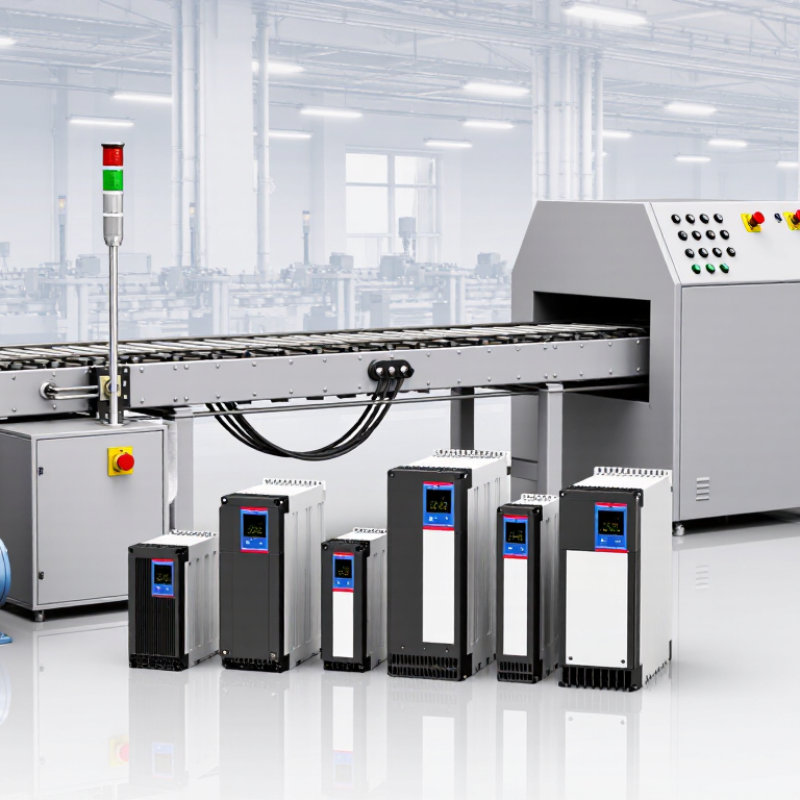
A China Delta frequency drive usually means a China-made variable frequency drive, or VFD, for controlling AC motor speed. It changes input power into a variable-frequency output. This lets a motor start smoothly, adjust speed, and reduce mechanical shock. Common applications include water pumps, ventilation fans, conveyors, compressors, and machine tools.
The value is practical. The International Energy Agency reports that electric motor systems consume about 50% of global electricity. Speed control can reduce pump and fan energy sharply, especially under changing loads. Fortune Business Insights estimated the global VFD market at about USD 25 billion in 2024, with continued growth expected through 2032. These figures show strong demand, but market growth does not prove every drive is reliable.
Choose by motor current, overload capacity, input voltage, control mode, and operating environment. Do not compare only horsepower. A dusty workshop may need stronger enclosure protection and cooling. A pump installation may require sleep, wake-up, and dry-run functions. Look for documented testing, traceable serial numbers, clear manuals, and compliance with relevant IEC 61800 standards. Ask for harmonic data when many drives share one electrical panel.
Field experience suggests commissioning matters as much as the hardware. Incorrect acceleration settings can trip protection or overheat the motor. Some low-cost units perform well, while others disappoint early. That uncertainty deserves attention. Test one unit under real load before large-scale purchasing.
How Delta Frequency Drives Work and What They Control
A frequency drive controls an AC motor by changing its electrical frequency and voltage. Lower frequency produces slower shaft rotation. Higher frequency increases speed within the motor’s rated limits. The drive first converts incoming AC power into DC power. An inverter then creates a controlled AC output using rapid switching pulses. This process sounds simple, but precise settings matter.
The drive can control speed, torque, acceleration, braking, and motor direction. It may also monitor current, voltage, temperature, and overload conditions. In pumps, it adjusts flow without constantly throttling a valve. In conveyors, it provides smoother starts and reduces mechanical shock. Sensorless vector control can improve low-speed torque, although it may perform poorly with incorrect motor data. Field testing often reveals this gap. A motor may run, but not efficiently.
Tips: Enter the motor’s nameplate values carefully. Check rated voltage, current, frequency, and speed. Keep cables short when possible. Use proper grounding and shielding. Review fault codes instead of repeatedly resetting the drive. Heat is another concern; a dusty cabinet can shorten service life quickly. I have found that factory defaults are convenient, not always correct. Test acceleration, deceleration, and emergency stopping under the real load. A small adjustment can prevent noise, overheating, or unstable operation.
How a Frequency Drive Controls Induction Motor Speed
This chart shows the theoretical synchronous speed of a four-pole induction motor at different inverter output frequencies. The relationship is calculated as speed = 120 × frequency ÷ number of poles. A frequency drive controls motor speed by changing the output frequency and matching voltage, while the actual shaft speed is slightly lower under load because of motor slip.
How to Choose the Best Delta Frequency Drive for Your Needs
What Is the Best China Delta Frequency Drive?
Choosing the best frequency drive starts with the machine, not the catalog. A pump, conveyor, and compressor need different control behavior. Check motor voltage, rated current, starting torque, speed range, and duty cycle before comparing models. For a typical 380 V, 50 Hz installation, leave practical current capacity above the motor nameplate value. This small margin can prevent nuisance trips.
Efficiency deserves careful attention. The U.S. Department of Energy reports that motor-driven equipment uses about 68% of industrial electricity in the United States. A properly sized drive can reduce throttling losses, especially in variable-torque pump and fan systems. However, energy savings depend on operating hours and load patterns. A drive running an oversized motor may still waste power. That is an easy detail to miss.
Inspect the installation environment closely. Dust, heat, cable length, and cabinet ventilation affect reliability. Select suitable overload capacity, enclosure protection, braking functions, and harmonic control. IEC 61800-3 provides a useful framework for electromagnetic compatibility in power drive systems. In field commissioning, I would record acceleration time, output current, motor temperature, and fault history during the first week. The data may challenge the original selection. That is useful, not embarrassing. Also confirm local service skills, spare-part access, safety documentation, and warranty terms before purchase. A lower purchase price means little when production stops.



 08045479132
 Send Inquiry

 Send Inquiry
 Send SMS