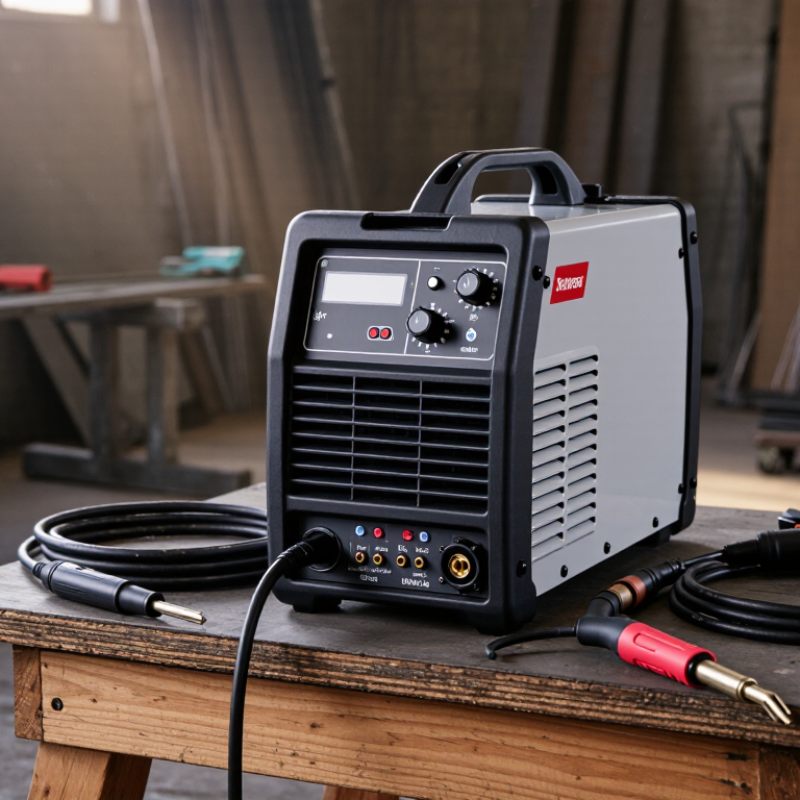
| IGBT inverter technology | The input is rectified to DC, then insulated-gate bipolar transistors (IGBTs) switch it at high frequency. A compact transformer and output circuitry convert and regulate the power for welding. | High-frequency conversion can make the power source smaller and lighter than a traditional line-frequency transformer welder. Electronic control can help regulate the welding output. | Users who need a portable power source and adjustable output for suitable welding processes. | Check the rated output, input requirements, duty cycle, protections, and service support. IGBT technology alone does not determine weld quality or reliability. |
| MMA / Stick (SMAW) | Typical compact machines provide about 20–200 A, though the range varies. The arc melts a flux-coated consumable electrode; its flux helps shield the weld pool. | Relatively simple setup, no external shielding-gas cylinder, and suitable for many outdoor repair tasks. | General repairs, maintenance, and work where portability or outdoor use matters. | Confirm supported electrode sizes, input supply, usable output at the required current, and duty cycle. |
| DC TIG (GTAW) | Typical compact units may offer roughly 10–200 A. A non-consumable tungsten electrode creates the arc; shielding gas is supplied separately, and filler metal can be added as needed. | Precise heat control and clean welds when the operator and joint preparation are suitable. | Detailed work on steel and stainless steel, including thinner material when correctly set up. | Check whether a TIG torch, gas controls, and high-frequency or lift start are included. DC-only TIG is generally not the standard choice for welding aluminum. |
| AC/DC TIG | Provides DC output for many steels and AC output commonly used for aluminum TIG welding. Available current and features depend on the machine. | Supports a wider range of TIG materials and applications than a DC-only unit. | Fabrication or repair work that includes aluminum as well as steel or stainless steel. | Compare AC balance and frequency controls, maximum output, input power needs, and the accessories supplied. |
| MIG / MAG (GMAW) | Typical light-duty inverter units may offer about 30–250 A. A continuously fed wire electrode forms the arc; shielding gas is used for MIG/MAG, while some machines also support gas-shielded or self-shielded flux-cored wire. | Continuous wire feed can support faster welding on suitable jobs and reduce frequent electrode changes. | Workshop fabrication, sheet-metal work, and repeated welds with a compatible wire and setup. | Check wire diameter range, spool capacity, feed adjustment, gas compatibility, and the machine’s rated duty cycle. |
| Duty cycle and thermal rating | Duty cycle is the portion of a stated test interval that a welder can operate at a specified current before cooling is required. For example, 60% over a 10-minute interval means 6 minutes welding and 4 minutes cooling at the stated conditions. | A clear rating helps indicate whether the machine can sustain the intended workload. | All buyers, especially those planning long welds or high-current work. | Compare duty-cycle figures at the same current and test standard; higher current commonly means a lower duty cycle. |
| Input power and portability | Small welders may be designed for a single-phase supply, but voltage, input current, plug, and output capability vary by model. A higher welding output can require more input power. | A suitable supply and manageable weight make the machine practical at the intended work site. | Home workshops, mobile repair, and jobs where access to power is limited. | Verify the exact supply voltage, circuit capacity, extension-lead requirements, machine weight, and local electrical compatibility. |
| Practical buying choice | There is no single best IGBT inverter welder for every user. The right choice depends on process, materials, thickness, available power, workload, and operator experience. | Matching features to the actual job avoids paying for capabilities that are not needed or choosing a machine that is underpowered. | Choose MMA for versatile basic repair, TIG for controlled precision work, MIG/MAG for continuous wire-feed work, or AC/DC TIG when aluminum TIG capability is required. | Prioritize process compatibility, realistic rated output, duty cycle, input supply, included accessories, safety features, warranty, and accessible service. |



 08045479132
 Send Inquiry

 Send Inquiry
 Send SMS