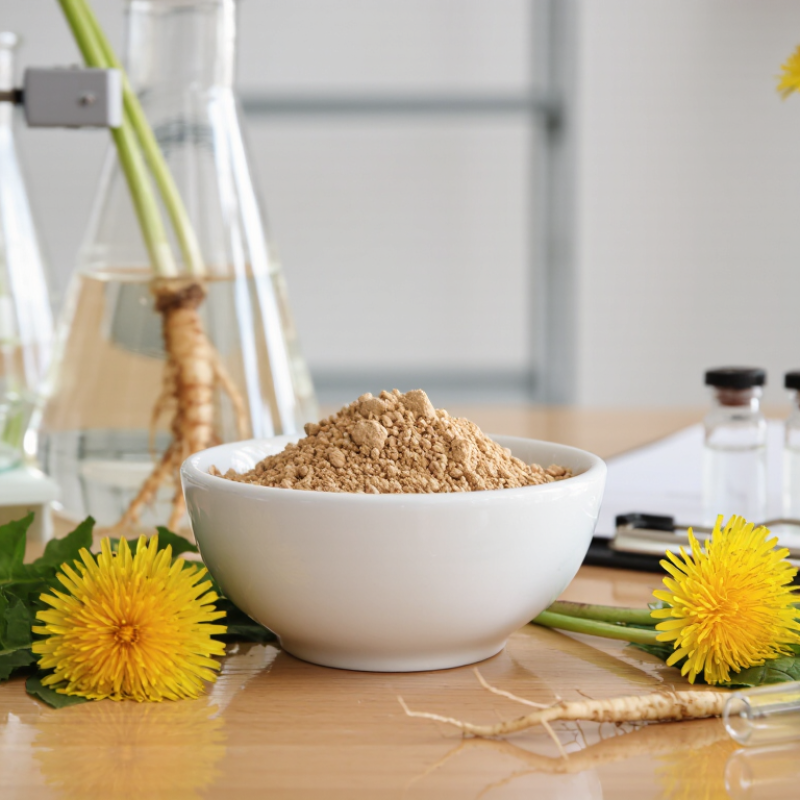
| Botanical identity | Dandelion, Taraxacum officinale F.H.Wigg. | Whole herb, leaf, root, or root-and-leaf preparations | Provides a botanical source of phenolic compounds, flavonoids, sesquiterpene lactones, triterpenes, minerals, and carbohydrates. | Botanical identity should be confirmed by macroscopic, microscopic, chromatographic, or DNA-based methods. | Raw material documentation should specify the accepted Latin name, plant part, harvest conditions, and extraction ratio. |
| Root composition | Dandelion root extract | Inulin, fructooligosaccharides, phenolic acids, sesquiterpene lactones, and triterpenes | Root preparations are commonly selected for digestive and prebiotic-oriented formulations because inulin is a fermentable fructan. | Inulin is well characterized as a dietary fiber; specific health effects depend on dose, product composition, and individual tolerance. | Inulin content can vary with harvest season, plant age, storage, and extraction method. |
| Leaf composition | Dandelion leaf extract | Chlorogenic acid, caffeic acid, chicoric acid, flavonoids, potassium, and other minerals | Used in botanical products focused on antioxidant support and traditional urinary-system applications. | Antioxidant activity is supported mainly by chemical and laboratory studies; it should not be presented as treatment for disease. | Mineral levels may vary according to soil, cultivation practice, plant maturity, and processing. |
| Phenolic acids | Leaf, root, and whole-herb extracts | Chlorogenic acid, chicoric acid, caffeic acid, and ferulic acid | Contribute to the extract’s phenolic profile and in-vitro radical-scavenging capacity. | Phenolic content is commonly evaluated using HPLC or spectrophotometric methods; results are not equivalent across methods. | A marker-based specification is preferable to relying only on total polyphenol values. |
| Flavonoids | Primarily leaf and flower materials | Luteolin, luteolin glycosides, apigenin derivatives, and quercetin glycosides | Support the botanical extract’s overall polyphenol and antioxidant profile. | Most evidence is preclinical or analytical; human clinical evidence for standardized dandelion extracts remains limited. | Light, oxygen, heat, and moisture can affect the stability of some phenolic constituents. |
| Sesquiterpene lactones | Especially associated with the root and latex | Taraxacin, taraxacerin-related compounds, and eudesmanolide-type constituents | Contribute to the characteristic bitter taste and are frequently used as chemical identity markers. | Reported activities are mainly based on laboratory and traditional-use evidence rather than robust clinical trials. | Bitter compounds may influence palatability and should be considered when developing beverages, capsules, or functional foods. |
| Triterpenes | Root, leaf, and flower materials | Taraxasterol, β-amyrin, and related pentacyclic triterpenes | Contribute to the non-polar fraction of dandelion extracts and are useful for broader phytochemical profiling. | Biological findings are predominantly preclinical and should not be converted into disease-treatment claims. | Extraction solvent selection strongly affects recovery of triterpenes compared with phenolic or carbohydrate constituents. |
| Traditional benefit | Leaf and root preparations | Potassium-containing minerals, phenolic compounds, bitter principles, and other native constituents | Traditionally used to support normal digestive function and urinary elimination. | Traditional use does not establish clinical efficacy for a specific medical condition. | Marketing language should remain consistent with applicable food, supplement, and botanical regulations. |
| Digestive support | Root extract containing naturally occurring inulin | Inulin and related fructan carbohydrates | Inulin can be fermented by gut microorganisms and may support dietary-fiber intake. | Individual responses vary; rapid increases in inulin intake may cause gas or abdominal discomfort in sensitive individuals. | Declare the plant part and measure dietary fiber or inulin with a validated analytical method when making composition claims. |
| Antioxidant profile | Leaf, flower, root, or whole-herb extract | Phenolic acids, flavonoids, and other reducing compounds | May contribute to in-vitro antioxidant capacity and help characterize the extract’s phytochemical richness. | In-vitro antioxidant results cannot be directly interpreted as proven antioxidant effects in humans. | Report the test method, reference standard, extract solvent, and dry-basis calculation for meaningful comparison. |
| Organic quality controls | Certified organic dandelion raw material or extract | Not a single active compound; quality depends on verified cultivation and processing controls | Supports traceability and helps limit the use of prohibited synthetic pesticides and fertilizers where certification applies. | Organic certification does not by itself guarantee a fixed concentration of active compounds or clinical efficacy. | Request current certification, lot traceability, pesticide-residue testing, heavy-metal testing, microbial testing, and an ingredient-specific certificate of analysis. |
| Safety considerations | All dandelion extract formats | Multiple constituents; no single universal active marker applies to every extract | Product suitability depends on extract concentration, plant part, dose, formulation, and user characteristics. | Individuals with known Asteraceae allergies or certain medical conditions should seek professional advice before use. | Supplier specifications should include allergen information, recommended use level, storage conditions, shelf life, and batch testing. |



 08045479132
 Send Inquiry

 Send Inquiry
 Send SMS