| Electrical Safety | Confirm that the device has appropriate protection against electric shock, overheating, abnormal operation, and power-supply faults. | Look for documentation referencing IEC 60601-1 when the product is marketed as medical electrical equipment. A complete user manual and safety file are preferable. | Critical | Unidentified power adapter, exposed wiring, excessive heat, burning smell, or missing electrical specifications. |
| Electromagnetic Compatibility | Check whether the machine can operate safely near common household electronics and whether it may interfere with other equipment. | IEC 60601-1-2 is the relevant EMC standard for many medical electrical devices. In the United States, FCC authorization addresses radio-frequency emissions but is not a complete medical-safety assessment. | Critical | No EMC information, unexplained interference with electronics, or claims that a regulatory mark alone proves clinical effectiveness. |
| Home-Use Suitability | Review instructions for placement, ventilation, storage, cleaning, supervision, and use by people without technical training. | For equipment intended for home healthcare environments, check whether the design and instructions address IEC 60601-1-11 considerations. | High | Instructions assume professional training or omit basic home-use precautions. |
| Output Transparency | Check whether frequency, magnetic-field strength, waveform, session duration, and output tolerance are clearly stated. | Specifications should use recognized units such as hertz (Hz) for frequency and tesla or microtesla (T or µT) for magnetic flux density, with test conditions described. | High | Only vague terms such as “powerful” or “professional strength,” with no measurable output data. |
| Independent Verification | Ask whether safety and output claims are supported by test reports from a competent, independent laboratory. | A report should identify the exact model, test date, methods, measured results, and applicable standards. Marketing statements are not substitutes for test evidence. | High | A certificate applies to a different model, has no traceable laboratory details, or cannot be provided on request. |
| Contraindication Information | Check for clear warnings concerning implanted electronic devices, pregnancy, active medical conditions, and other situations requiring professional advice. | The manual should identify intended users, excluded users, possible adverse effects, and when to stop using the device. Magnetic fields may interfere with some implanted electronic devices. | Critical | Statements that the machine is universally safe or suitable for every medical condition. |
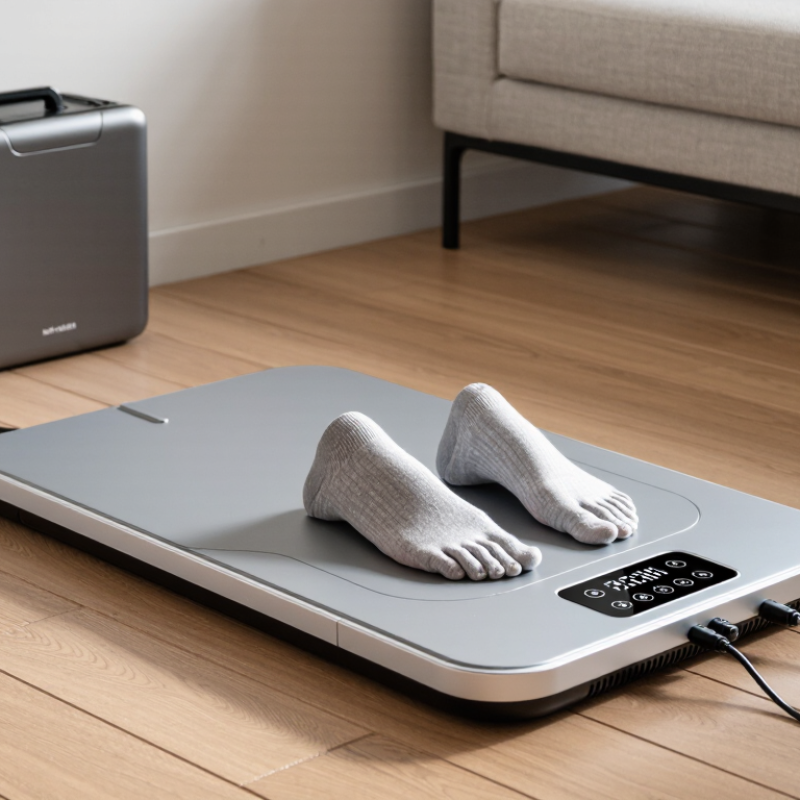
| Footbed Comfort | Assess cushioning, surface texture, foot-space, edge design, and whether the footbed creates pressure points. | A suitable design should allow a natural seated posture, provide stable foot placement, and remain comfortable for the full recommended session. | High | Hard seams, slippery surfaces, cramped foot space, or discomfort during a short trial. |
| Heat and Sensation | Determine whether the device produces heat, vibration, sound, or other sensations and whether these can be adjusted. | The manual should describe expected sensations and operating temperature. Users should be able to stop a session immediately if discomfort occurs. | High | Unexpected heating, strong sensations not described in the manual, or no accessible stop control. |
| Controls and Display | Evaluate button layout, display readability, session timer, intensity control, program selection, and error notifications. | Controls should be understandable without technical knowledge. Usability engineering principles are addressed by IEC 62366-1 for applicable medical devices. | High | Confusing icons, hidden settings, unclear units, or a session that cannot be stopped quickly. |
| Automatic Session Control | Look for a built-in timer, automatic shutoff, restart protection, and a clearly marked emergency stop or power switch. | Automatic shutoff should follow the programmed session and the device should return to a safe state after a power interruption where applicable. | Critical | No timer, no automatic shutoff, or unexpected operation after power is restored. |
| Cleaning and Skin Contact | Check whether the footbed is sealed, easy to wipe, resistant to ordinary cleaning agents, and free from difficult-to-clean gaps. | Materials that contact skin should be identified, and applicable biological-safety evaluation should be considered under the ISO 10993 series. | High | Absorbent fabric, inaccessible seams, unclear cleaning instructions, or materials with strong chemical odors. |
| Portability and Stability | Compare weight, carrying handles, cable storage, base stability, and the space required for operation. | A stable base, non-slip feet, and manageable dimensions reduce the risk of accidental movement or trips during use. | Medium | Sharp edges, unstable positioning, loose cables, or a weight that makes regular setup impractical. |
| Manual and Customer Support | Review the clarity of setup instructions, troubleshooting steps, maintenance guidance, and access to replacement parts. | The manual should include model identification, electrical ratings, intended use, warnings, cleaning instructions, and service contact details. | Medium | Poorly translated instructions, missing model information, or no repair and support process. |
| Claims and Intended Use | Separate measurable device specifications from claims about treating symptoms or medical conditions. | Prefer transparent claims supported by published evidence and applicable regulatory documentation. No single PEMF setting is universally established as the best option for every user. | High | Promises to cure multiple diseases, replace medical treatment, or deliver guaranteed results for everyone. |



 08045479132
 Send Inquiry

 Send Inquiry
 Send SMS