How to Choose the Right Stereo Microscope for Your Needs?
Choosing the right stereo microscope is crucial for various applications. According to a report by Market Research Future, the global stereo microscope market is expected to grow at a CAGR of 7.2% from 2021 to 2026. This growth reflects the increasing demand in fields like biology, materials science, and electronics. Professionals in these areas rely heavily on stereo microscopes for detailed observations.
A stereo microscope provides 3D visualization, enhancing depth perception. This feature is vital for tasks like dissection and assembly. When selecting a microscope, consider your primary applications. The optical quality, magnification range, and ergonomic design are key aspects. However, it’s essential to continuously evaluate the affordability and functionality of various models on the market.
Investing in a stereo microscope can be daunting due to the many options available. Brands vary significantly in quality and price. It's wise to reflect on your specific needs, as an inadequate choice could lead to frustration. Understanding these factors will guide you in making an informed decision, ensuring you select a microscope that suits your requirements effectively.

Understanding the Basics of Stereo Microscopes
When selecting a stereo microscope, it is essential to grasp its fundamental aspects. Stereo microscopes offer a three-dimensional view of specimens. They are particularly valuable in biology and material science. Understanding their parts can aid in making informed choices.
A stereo microscope comprises two optical paths that provide depth perception. This feature sets it apart from standard microscopes. The view through a stereo microscope is wide and clear, making small details easy to see. Factors like magnification power and working distance play a significant role. As you explore these features, keep in mind your specific needs and requirements.
Beyond technical specifications, think about how you will use the microscope. Will it be for intricate detail work, or for general observation? Reflect on your past experiences with similar tools. Each application may demand different adjustments. Understanding these nuances will lead to more reliable results. Ultimately, a stereo microscope should enhance your viewing experience and contribute to better outcomes in your work or research.
Choosing the Right Stereo Microscope: Key Features and Preferences
Identifying Your Specific Application Needs
Selecting the right stereo microscope involves understanding your application needs. Different fields require different specifications. For example, biological research often demands high magnification and excellent color fidelity, while industrial applications might focus on durability and ease of use. According to a 2022 report by the Microscopy Society, over 40% of users prioritize magnification power in their selection process.
When identifying your specific application needs, think about the features that matter most. Consider working distance, illumination type, and image quality. For instance, if you need to inspect circuit boards, a microscope with a longer working distance may be crucial. A study from a leading microscopy journal indicated that 35% of users experience frustration related to inadequate working distances.
Tips for choosing the right microscope: Focus on field of view. A broader field enhances your ability to see more details. Ensure stable illumination; inconsistent lighting can obscure critical features. Finally, assess the ergonomics. A comfortable setup improves both efficiency and prolonged use. Reflect on how well your current microscope meets these criteria; it might not serve all your needs effectively.
Evaluating Key Specifications and Features
When choosing a stereo microscope, key specifications and features play a critical role. Consider magnification range, which often influences the level of detail in observations. A range of 7x to 45x is common, offering ample flexibility for various applications. Increased magnification provides better resolution, essential for tasks such as dissection or quality control in manufacturing.
Lighting is another fundamental aspect. LEDs are standard, providing bright, even illumination. Studies show that over 60% of users prefer adjustable lighting for better contrast. However, not all LED systems produce uniform light, which can lead to inconsistencies in observations. It’s vital to assess how lighting affects your work when selecting a microscope.
Additionally, ergonomic design should not be overlooked. A comfortable eyepiece position can prevent fatigue during prolonged usage. Research indicates that nearly 40% of users experience discomfort due to poor design. Testing different models is beneficial. Don’t rush this decision; take the time to evaluate each feature. A microscope is a long-term investment, so careful consideration ensures it meets your unique needs.
How to Choose the Right Stereo Microscope for Your Needs? - Evaluating Key Specifications and Features
| Specification |
Description |
Importance |
| Magnification Range |
Typically ranges from 10x to 200x |
Determines detail level visible |
| Objective Lenses |
Quality of lenses impacts image clarity |
Critical for resolution and contrast |
| Illumination Type |
LED, halogen, or fluorescent lighting options |
Affects viewing comfort and detail |
| Working Distance |
Distance between lens and specimen |
Important for manipulating samples |
| Field of View |
Size of the area visible through the microscope |
Affects ease of viewing larger specimens |
| Ergonomic Design |
Comfort during prolonged use |
Reduces user fatigue and enhances usability |
| Portability |
Weight and ease of transport |
Ideal for field use or shared environments |
| Price |
Varies widely by features and brand |
Must fit budget while meeting needs |
Comparing Different Brands and Models
When selecting a stereo microscope, understanding the differences among brands and models can be crucial. Various brands offer unique features tailored to specific applications, from educational uses to advanced research. According to a 2023 market analysis by industry experts, image clarity and depth perception are paramount in most professional settings. Certain models provide superior optical performance, while others focus on user-friendly interfaces.
Different manufacturers often cater to distinct user needs. For instance, models designed for biological applications might emphasize higher magnification levels, while those for industrial inspection prioritize durability and ease of use. A report from the Global Optical Instruments Industry indicates that about 55% of users value ergonomic design alongside optical quality. Choosing a model that fits your specific tasks can significantly affect efficiency.
Another consideration is the price-to-performance ratio. Some mid-range models demonstrate features that rival high-end competitors at a fraction of the cost. However, lower prices can sometimes mean compromises in build quality or customer support. Some users report dissatisfaction due to lack of responsive service. Evaluating this balance requires careful thought and can lead to purchasing regrets, highlighting the need for thorough research before making a decision.
Budget Considerations for Purchasing a Stereo Microscope
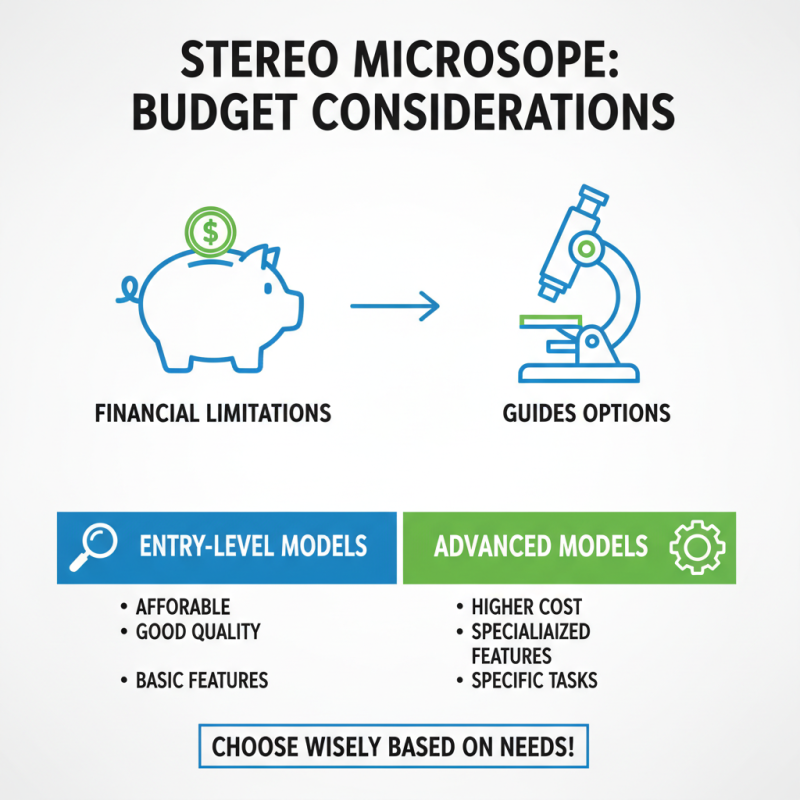
When considering the purchase of a stereo microscope, budget plays a significant role. A careful analysis of your financial limitations will guide your options. Entry-level models often provide a good balance between quality and affordability. However, these may lack advanced features necessary for specific tasks.
Tips: Determine your primary use for the microscope before making a purchase. If you require high magnification, be prepared to invest more. Cheaper models may compromise optical quality, which could affect your work.
Reassess the features you truly need. Some users get caught up in additional accessories that aren't essential. Focus instead on the core functionality. Look for microscopes with adjustable lighting and comfortable eyepieces. Such elements enhance usability, making the investment worthwhile.
Don't rush the decision. Explore multiple options and compare their specifications. Each microscope holds unique strengths. A little patience often yields a better purchase outcome, fitting both your budget and your practical requirements.



 08045479132






 Send Inquiry

 Send Inquiry
 Send SMS