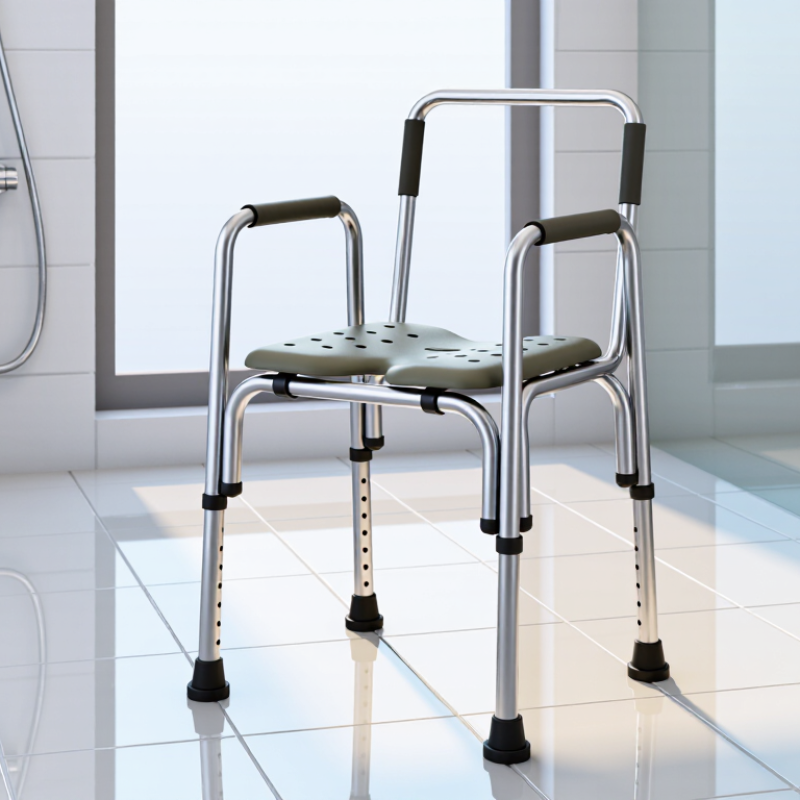
| Main Frame Material | Aluminium alloy tubing with a corrosion-resistant surface finish. | Aluminium is lightweight and does not rust like ordinary untreated steel when regularly exposed to bathroom moisture. | Check for smooth tubes, sealed joints, consistent finishing, and no visible corrosion, sharp edges, or cracks. |
| Weight Capacity | Common product ratings are approximately 100–150 kg, depending on the frame design and intended use. | A clearly stated load rating helps users select a chair with an appropriate safety margin. | Confirm that the rated capacity is documented and supported by structural testing or product instructions. |
| Seat Height Adjustment | Several height positions, commonly covering about 420–520 mm from the floor. | Adjustability allows the user to place both feet securely on the floor and reduces strain when sitting or standing. | Test the adjustment holes, push buttons, and locking pins to ensure they engage fully and evenly. |
| Seat Surface | Water-resistant, non-porous plastic seat with drainage holes or channels. | Drainage improves comfort and helps prevent standing water on the seating surface. | Look for a smooth, easy-to-clean surface without exposed fasteners, deep crevices, or uncomfortable edges. |
| Seat Dimensions | A typical bath chair seat is approximately 400–500 mm wide and 350–450 mm deep. | Suitable dimensions provide stability while allowing the chair to fit inside many standard shower areas. | Measure the available bathroom space and compare it with the chair’s overall width, depth, and turning clearance. |
| Leg Stability | Four evenly balanced legs fitted with non-slip rubber or elastomer feet. | High-friction feet help reduce movement on wet bathroom floors. | Check that all feet contact the floor evenly and remain securely attached during use. |
| Frame Construction | Reinforced cross-bracing or securely joined tubing designed to limit side-to-side movement. | A rigid frame improves user confidence and reduces stress on joints and fasteners. | Apply gentle pressure from different directions and check for excessive flexing, wobbling, or loose connections. |
| Product Weight | Many aluminium bath chairs weigh approximately 2–5 kg, depending on size and accessories. | A lighter chair is easier to lift, move, and store, while sufficient frame strength must be maintained. | Compare the product weight with the required load capacity, frame thickness, and intended frequency of movement. |
| Fasteners and Hardware | Moisture-resistant screws, bolts, washers, and adjustment components. | Suitable hardware helps reduce loosening and corrosion in a humid bathroom environment. | Inspect all fasteners for secure installation, compatible materials, and easy access for maintenance. |
| Cleaning and Hygiene | Tool-free or simple assembly with accessible surfaces and minimal dirt-trapping gaps. | Easy cleaning helps maintain bathroom hygiene and extends the service life of the chair. | Confirm that the chair can be cleaned with mild soap and water according to the care instructions. |
| User Safety Design | Rounded edges, stable geometry, non-slip feet, and clearly marked height adjustments. | These features help reduce the risk of cuts, slipping, unstable seating, and incorrect assembly. | Review the instruction manual and verify that safety warnings, assembly steps, and weight limits are clear. |
| Packaging Protection | Protective packaging that prevents frame scratches, seat damage, and deformation during transport. | Good packaging helps the chair arrive in usable condition without affecting alignment or appearance. | Check packaging strength, internal cushioning, moisture protection, and the completeness of included parts. |
| Documentation and Support | Clear assembly instructions, dimensions, load rating, care guidance, and replacement-part information. | Accurate documentation supports safe installation, routine inspection, and long-term maintenance. | Request product drawings, test reports where applicable, inspection procedures, and after-sales service terms. |



 08045479132
 Send Inquiry

 Send Inquiry
 Send SMS
