What Is a Paper Coating Machine and How Does It Work?
A Paper Coating Machine applies a controlled liquid layer to paper, improving its surface, printability, brightness, and resistance. The coating may contain pigments, binders, water, and functional additives. Its formula depends on the paper grade and the final product.
Dr. Pratima Bajpai, a recognized paper-technology author and researcher, describes coating as “one of the most important operations in paper manufacturing.” Her observation reflects the machine’s practical importance. A coating line must handle a moving paper web without creating streaks, wrinkles, or uneven coverage. Small defects can become visible under bright printing ink.
The process begins when a paper roll unwinds at a carefully controlled speed. An applicator places coating onto one or both sides. A blade, rod, air knife, or metering device then removes excess material. This step determines the coating weight. Infrared or hot-air dryers remove moisture before the web reaches later finishing stages. Some lines include calendering, which presses the surface between polished rolls.
It sounds straightforward.
In practice, it is not.
Temperature, viscosity, tension, speed, and drying capacity must remain balanced. A minor change in coating viscosity may alter gloss or cause scratches. Operators therefore watch sensors, inspect samples, and adjust settings during production. Modern systems improve consistency, but they cannot replace informed judgment. A clean machine design helps, yet maintenance remains essential. This article explains each major component, the coating sequence, common operating problems, and the quality checks used to produce reliable coated paper.
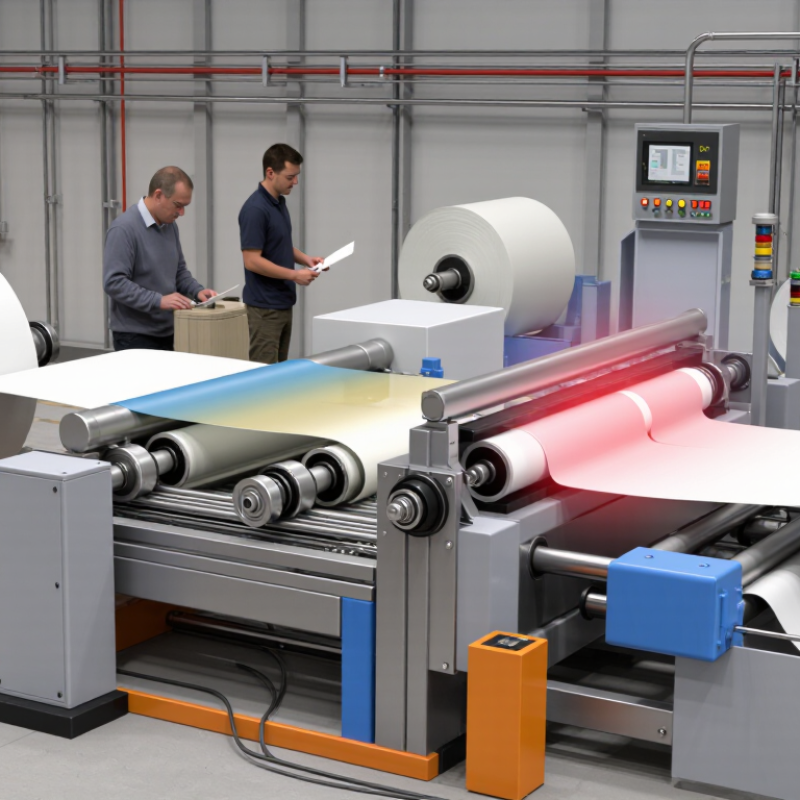
What a Paper Coating Machine Is
A paper coating machine is an industrial system that adds a controlled layer to a moving paper web. The coating may contain pigments, binders, minerals, or functional additives. It can improve smoothness, brightness, printability, moisture resistance, or surface strength. Unlike a simple printer, this machine treats paper continuously at high speed. Its main job is not merely applying liquid. It must spread the coating evenly, control its thickness, and protect the paper from defects.
A typical line begins with an unwind stand that feeds a large paper roll. Tension controls keep the web stable as it moves forward. An applicator, such as a blade, rod, or curtain system, places coating onto the surface. A metering device removes excess material and sets the final coat weight. The coated sheet then passes through heated air dryers or infrared units. Cooling rollers reduce the temperature before the paper reaches a rewinder. Sensors monitor moisture, thickness, speed, and surface appearance. Operators still inspect samples by hand. Small adjustments matter.
A reliable machine depends on balance. Too much coating can cause cracking, blocking, or slow drying. Too little may leave rough areas and uneven print results. From practical operation, the most difficult issue is often paper variation, not machine speed. Fiber structure, moisture, and roll tension can change during one production run. Even experienced operators sometimes correct the wrong setting first. That mistake deserves review. Good process records, routine calibration, and careful sample testing make the result more dependable.
What Is a Paper Coating Machine and How Does It Work?
A paper coating machine applies a controlled layer of coating slurry to the paper surface. The coating is metered to a target coat weight, dried with heated air, and may be finished by calendering to improve smoothness, brightness, and printability.
The values shown are representative midpoints of commonly used one-side dry coat-weight ranges. Actual settings depend on paper grade, coating formulation, machine speed, drying capacity, and the required surface finish.
Core Components and Their Functions
What Is a Paper Coating Machine and How Does It Work?
Core Components and Their Functions
A paper coating machine applies a controlled liquid layer to a moving paper web. This layer can improve smoothness, printability, brightness, or surface protection. The unwind stand releases the paper roll at a steady speed. A web guide keeps the sheet centered and reduces edge movement. Small alignment errors can still create uneven coating.
The coating station contains an applicator, coating pan, and metering blade or rod. The applicator transfers the mixture onto the paper surface. The blade removes excess material and helps control coat weight. Pumps maintain a consistent flow, while sensors monitor speed, tension, moisture, and temperature. After application, dryers remove water or solvent through carefully managed heat and airflow. Excessive heat may curl or weaken the paper. The calender then presses the surface between polished rolls, improving smoothness and gloss. Finally, the rewinder forms a finished roll for storage or converting.
Tips: Check tension before starting. Inspect the blade edge regularly. A tiny defect can leave a visible streak across many meters of paper. Keep coating viscosity stable, but do not rely on one reading alone. Operators should compare sensor data with actual samples. This simple habit often reveals problems earlier. Perfect uniformity is difficult, especially during speed changes, so trial runs deserve careful review.
How Paper Moves Through the Coating Line
A paper coating machine guides a continuous web through several controlled zones. The journey starts at the unwind stand, where large rolls open smoothly. Splice systems join new rolls without stopping production. Tension sensors keep the web stable. Too much tension can stretch or break it. Too little creates wrinkles.
The moving sheet then reaches the coating station. A blade, rod, or slot-die applicator spreads liquid across one or both surfaces. Metering removes excess coating and controls the final layer. The web enters heated drying chambers next. Air temperature, airflow, and residence time must work together. Dry too quickly, and the coating may crack. Dry too slowly, and blocking can occur during rewinding. The paper may pass through a calender afterward, where pressure improves smoothness and gloss. Finally, a reel winds the finished web into a firm, usable roll. Small defects still matter.
The scale is substantial. FAO’s Forestry Production and Trade data recorded about 417 million tonnes of paper and paperboard production worldwide in 2022. CEPI reported European paper and board production near 79.5 million tonnes in 2023, despite a sharp yearly decline. These figures explain why coating lines prioritize stable speeds, low waste, and repeatable quality. In practical operation, however, one setting rarely suits every grade. Fibre mix, moisture, coating solids, and machine speed constantly interact. Experienced operators adjust gradually, inspect the web under angled light, and question readings that appear perfect.
How Coating Is Applied, Smoothed, and Dried
What Is a Paper Coating Machine and How Does It Work?
A paper coating machine applies a thin layer to improve print quality, surface feel, or resistance to moisture. The process begins when prepared coating liquid reaches the paper through a roll, blade, rod, or slot system. The applicator must keep the flow steady. Small changes in pressure can create streaks, bubbles, or uneven coverage.
How Coating Is Applied, Smoothed, and Dried
After application, a metering blade or rod removes excess coating and controls the final thickness. This stage is precise, but not perfectly predictable. Paper tension, coating temperature, and surface absorbency all affect the result. Experienced operators check the wet film, edge condition, and machine vibration during production. A paper sheet may look smooth while still holding uneven moisture beneath the surface.
Drying usually combines hot air, infrared energy, or both. The dryer removes water gradually and helps form a stable coating layer. Excessive heat can curl the paper or cause surface defects. Insufficient drying may lead to blocking when sheets are stacked. The drying profile should match the coating formula and paper grade.
Tips: Keep coating viscosity within its tested range. Inspect blades and rods for wear. Measure moisture across the web, not only at the center. Slow the line when defects appear; speed can hide the real cause. A short trial run is often wiser than a full production guess.
Key Factors That Control Coating Quality
What Is a Paper Coating Machine and How Does It Work?
Key Factors That Control Coating Quality
A paper coating machine applies a thin layer of pigment, binder, and additives to a moving paper web. The coating unit meters this mixture with a blade, rod, or air-knife system. Drying sections then remove water through controlled heat and airflow. The final surface affects print sharpness, gloss, stiffness, and ink absorption.
Coating quality begins with moisture control. Uneven base-paper moisture can create streaks, curling, or unstable coat weight. According to CEPI Key Statistics 2023, European paper and board production reached about 79.5 million tonnes. At that scale, small process variations can generate substantial material losses. Coat weight must remain stable across both the machine direction and cross direction. Operators check it through online sensors and laboratory measurements.
Speed changes everything. Higher web speed reduces drying time and increases the risk of blistering or poor bonding. Dryer temperature, air volume, viscosity, and solids content must work together. ISO 8254-1 provides a recognized method for measuring paper gloss. TAPPI T 530 also supports testing of paper surface strength. These tests reveal problems that visual inspection may miss.
Small details matter. A worn blade can leave a faint line across the sheet. A blocked nozzle can create a repeating defect. In my experience, operators sometimes trust automatic settings too quickly. That is risky. Paper grade, season, and coating chemistry keep changing. A stable process still needs human review, careful sampling, and occasional adjustment.



 08045479132
 Send Inquiry

 Send Inquiry
 Send SMS