How to Purify Biogas for Efficient Energy Production?
In the journey towards sustainable energy, biogas has emerged as a valuable resource. Biogas is primarily composed of methane and carbon dioxide. However, its raw form often contains impurities that hinder efficient energy production. This is where Biogas Purification plays a crucial role in enhancing its quality and usability.
Implementing efficient biogas purification methods is essential. Various techniques exist, including chemical absorption and membrane separation. Each method has its benefits and challenges. For instance, absorption can effectively remove contaminants, but it may require complex processes. Purification not only improves energy yield but also contributes to environmental sustainability.
Despite advancements, the field still faces hurdles. Cost issues and the uneven availability of technologies are significant barriers. Insights from experienced professionals in the biogas industry can guide improvements. Ongoing research into innovative purification methods will pave the way for better energy solutions. Ensuring reliable biogas purification is vital for a cleaner energy future.
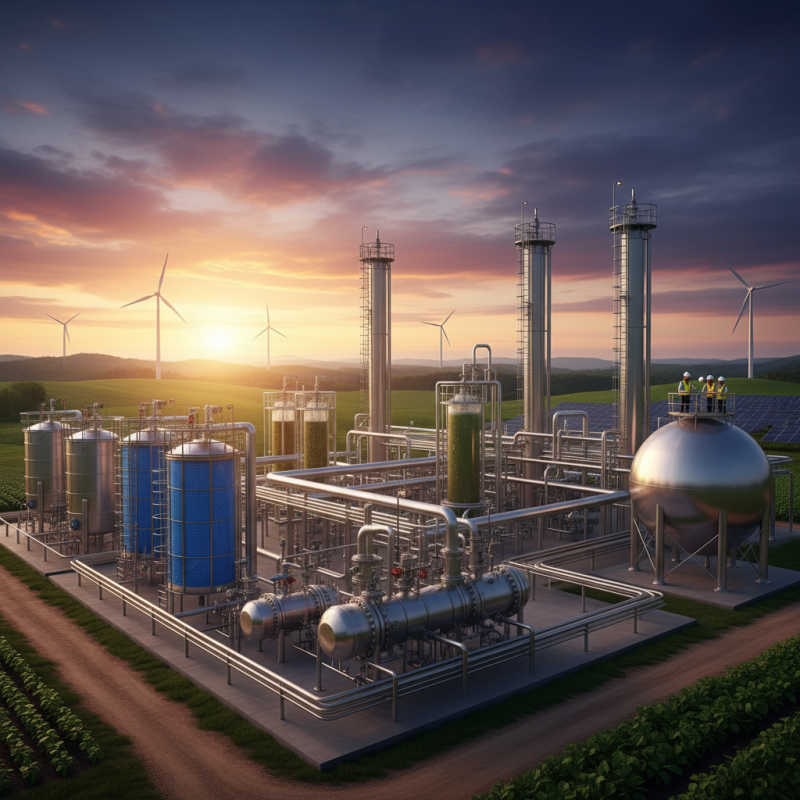
Key Advantages of Purifying Biogas for Energy Generation Efficiency
Purifying biogas offers significant advantages for energy generation efficiency. Biogas, primarily composed of methane and carbon dioxide, can be upgraded for better purity. This enhances its energy content, making it more suitable for various applications. A higher methane concentration translates to increased combustion efficiency, which can lead to greater energy output.
Additionally, the purification process removes contaminants such as hydrogen sulfide and moisture. This not only protects equipment from corrosion but also improves the longevity of energy production systems. By ensuring cleaner biogas, facilities can operate more reliably and reduce maintenance costs. However, achieving the right balance in purification techniques can be challenging. Finding the most effective method often requires trial and error.
Investing in biogas purification can also support sustainability goals. Cleaner energy reduces greenhouse gas emissions, contributing to a healthier environment. Nonetheless, the initial investment and operational costs may be daunting for some. It’s crucial to weigh these factors against the long-term benefits. Overall, purifying biogas presents both opportunities and challenges that warrant careful consideration.
Understanding Biogas Composition: Methane, CO2, and Impurities Explained
Biogas is a renewable energy source primarily composed of methane (CH4) and carbon dioxide (CO2). The methane content generally ranges from 50% to 70%, while CO2 makes up about 30% to 50%. The presence of impurities such as hydrogen sulfide (H2S) and ammonia (NH3) can affect its usability. These impurities are often found in trace amounts but can cause significant problems during energy production.
Inadequate purification processes can lead to corrosion or damage to engines. For instance, H2S can be highly corrosive and presents health hazards. A recent report by the International Energy Agency states that inadequate biogas treatment can result in energy losses of 30% to 50%. Removing impurities enhances the quality of biogas, making it a more efficient fuel.
Various methods exist for purifying biogas, such as water scrubbing and pressure swing adsorption. However, implementations are not foolproof. Each technique has its limitations, and the choice often depends on the specific impurities present. Data shows that improper selection can yield biogas with only 40% methane, making it less viable for energy production. Addressing these challenges is critical for maximizing the potential of biogas as a sustainable energy option.
Common Purification Techniques: Water Scrubbing, Pressure Swing Adsorption
Purifying biogas is crucial for enhancing its energy efficiency. Among the various techniques, water scrubbing and pressure swing adsorption (PSA) stand out. Water scrubbing uses water to dissolve specific gases, like carbon dioxide. This method is straightforward and cost-effective. Studies indicate that water scrubbing can remove up to 99% of CO2 from biogas. However, it also has limitations. High concentrations of certain impurities can affect its performance.
Pressure swing adsorption is another advanced technique. PSA employs different pressures to separate gases based on molecular characteristics. It effectively enhances biogas quality by removing contaminants, like hydrogen sulfide and siloxanes. In practical applications, PSA can improve methane purity to exceed 97%. The process can be energy-intensive and requires careful operation. Operators must monitor pressure levels and intake flows to optimize performance.
Choosing the right purification method is vital. While both methods have unique advantages, the decision often depends on specific biogas composition and intended use. Some facilities experience challenges in scaling these processes. Upfront costs and long-term maintenance must also be considered. Industry data shows that optimizing purification can lead to a 25-30% increase in energy output. Balancing efficiency and operational practicality remains a key focus for biogas facilities.
Quantifying Energy Gains: Improved Biogas Yield through Effective Purification
Purifying biogas is crucial for optimizing energy production. Effective purification processes can significantly enhance biogas yield. This is essential for sustainable energy solutions. Improved purification also minimizes impurities like hydrogen sulfide and carbon dioxide. These impurities reduce overall energy efficiency.
The efficiency of biogas systems often hinges on the quality of the gas produced. This means that regular monitoring is needed to assess purification effectiveness. Not every purification method is equally effective. Each has its pros and cons. Some systems may be costly to operate, raising concerns about their feasibility. Technical challenges might persist, requiring ongoing research and development.
Investing in better purification technology can yield higher energy returns. Systems that provide consistent and clean biogas are fundamental. Yet, this requires careful planning and execution. Some plants may struggle with upgrading their facilities. This reflects the need for continued exploration in biogas purification. Understanding local conditions is vital for custom solutions that ensure success.
Future Trends in Biogas Purification Technologies and Their Impact on Energy Production
The future of biogas purification technologies holds significant potential for enhancing energy production. Researchers are focusing on innovative methods to increase efficiency and reduce costs. Emerging techniques, such as membrane separation and pressure swing adsorption, are gaining traction. These methods promise higher purity levels while minimizing energy input.
Moreover, advancements in chemical absorption are becoming more prominent. These systems can efficiently remove impurities like hydrogen sulfide and carbon dioxide. Their integration could lead to more sustainable biogas plants. However, scaling these technologies remains a challenge. Decision-makers must consider economic viability and environmental impact while adopting new solutions.
As the market evolves, we might see shifts towards decentralized purification systems. This could enable smaller entities to produce and use biogas effectively. However, reliance on these technologies requires further research. Industry adherence to safety and quality standards is essential to ensure reliability. Balancing innovation with practical application will be key for future success.
How to Purify Biogas for Efficient Energy Production?
| Purification Technology | Efficiency (%) | Cost ($/m³) | Current Usage (%) | Future Trend |
| Membrane Separation | 85 | 0.15 | 40 | Increasing Adoption |
| Chemical Scrubbing | 90 | 0.20 | 30 | Enhanced Efficiency |
| Biological Filters | 75 | 0.10 | 20 | Sustainable Growth |
| Pressure Swing Adsorption | 95 | 0.25 | 10 | Emerging Technology |
| Cryogenic Separation | 99 | 0.50 | 5 | R&D Phase |



 08045479132
 Send Inquiry

 Send Inquiry
 Send SMS