China Top 10 ASTM A106 Pipe Manufacturers?
Choosing among China’s top 10 Astm A106 Pipe manufacturers requires more than comparing prices. ASTM A106 Pipe is commonly selected for high-temperature service, steam lines, process piping, and refinery applications. Yet, not every supplier offers the same manufacturing control. Differences appear in steel chemistry, heat treatment, wall-thickness consistency, and documentation quality.
A practical evaluation should begin with the mill’s production experience. Can it provide recent heat numbers and complete material test certificates? Does its laboratory verify tensile strength, yield strength, elongation, and hydrostatic performance? These details matter when pipes face pressure, heat, and repeated thermal cycling. Small differences can become expensive failures.
Metallurgy author John D. Verhoeven wrote, “The properties of a material are determined by its structure.” This principle applies directly to ASTM A106 Pipe. Chemical composition alone does not guarantee dependable service. Rolling practice, normalizing treatment, inspection discipline, and storage conditions also influence performance. A serious manufacturer should explain these controls clearly.
Factory visits can reveal practical evidence. Look for marked pipe bundles, protected bevels, calibrated gauges, and traceable inspection records. Ask for references from projects using comparable sizes and schedules. Be cautious with impressive websites. They are not proof.
This comparison will examine ten leading Chinese manufacturers through product range, certifications, export experience, testing capacity, and customer support. Rankings remain imperfect. A supplier suitable for a small boiler project may not fit a critical petrochemical line. Buyers should verify every claim against current documents, applicable specifications, and independent inspection requirements.
What Is ASTM A106 Pipe and Why Is It Widely Used?
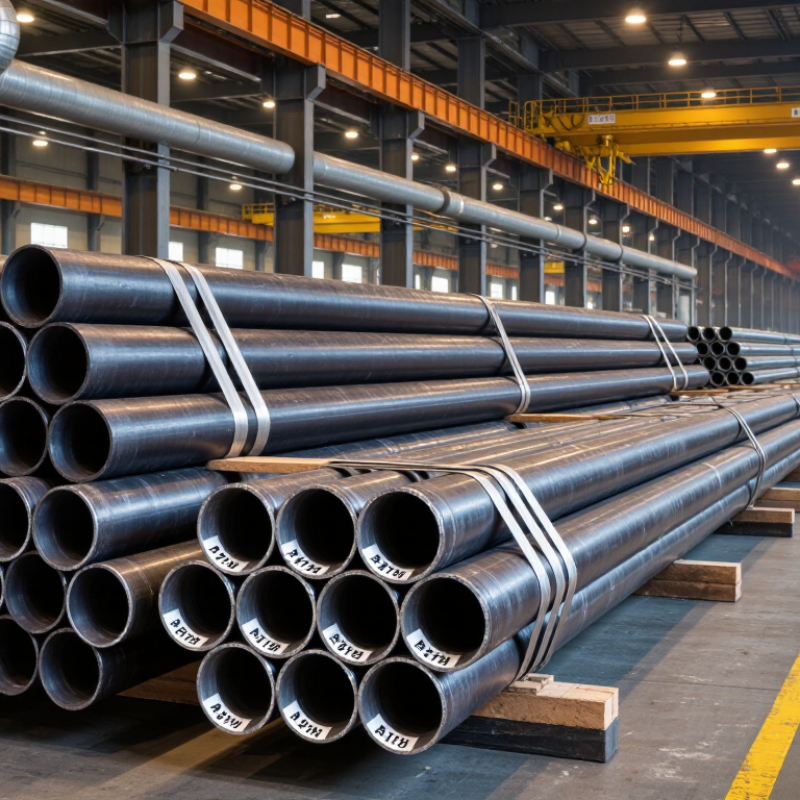
ASTM A106 pipe is a seamless carbon steel pipe designed for high-temperature service. It is commonly supplied in Grades A, B, and C. Grade B is often selected for balanced strength, weldability, and cost. The standard controls chemical composition, tensile properties, dimensions, and testing requirements. Its seamless construction removes a longitudinal weld seam. That matters in demanding pressure systems.
ASTM A106 pipe is widely used because it performs reliably in hot process environments. Refineries, power stations, chemical plants, and boiler systems commonly specify it. A pipe rack may carry steam near 400°C, while process lines handle oil, gas, or water. Engineers value its predictable fabrication behavior and broad availability. Welders can prepare, join, and inspect it using established procedures. However, service temperature, pressure, wall thickness, and corrosion allowance must match the design.
A common mistake is treating A106 as a universal pipe solution. It is not automatically corrosion-resistant or suitable for every fluid. Engineers must verify mill certificates, heat numbers, hydrostatic tests, and non-destructive examination records. Small details can expose weak quality control. Specifications are sometimes read too quickly. That oversight can lead to incorrect grade selection, premature thinning, or unsafe installation. Careful manufacturer evaluation remains essential, especially when production consistency matters.
How China’s Top ASTM A106 Pipe Manufacturers Are Selected
China Top 10 ASTM A106 Pipe Manufacturers?
How China’s Top ASTM A106 Pipe Manufacturers Are Selected
Selecting leading ASTM A106 pipe manufacturers requires more than checking production capacity. A reliable review examines material traceability, furnace records, heat numbers, and inspection procedures. Manufacturers should provide valid certificates for chemical composition, tensile strength, yield strength, and hydrostatic testing. Their pipes should match the required Grade A, B, or C specification. Factory experience also matters, especially for high-temperature service and pressure pipeline projects.
Independent audits can reveal practical details that brochures often miss. Inspectors may review calibration records, welding controls, ultrasonic testing, and surface-finish consistency. Delivery performance deserves attention too. A technically strong supplier can still create problems through weak packaging or incomplete documents. We also consider export experience, technical communication, and after-sales handling. No ranking is perfect. Buyer requirements differ, and published information may change.
Tips: Request recent mill test certificates and sample inspection reports. Confirm dimensions, wall thickness, end preparation, and coating requirements before ordering. Visit the facility when possible, or use an independent inspection agency. Ask how rejected pipes are identified and isolated. Small details matter. A clear sampling plan can prevent costly misunderstandings. Excellent claims should still be checked against physical evidence.
How China’s Top ASTM A106 Pipe Manufacturers Are Selected
Mechanical performance is one of the key technical benchmarks used when evaluating ASTM A106 seamless carbon steel pipe manufacturers. The chart compares the ASTM A106/A106M minimum tensile and yield strength requirements for Grades A, B, and C.
Selection insight: Manufacturers should provide traceable mill test certificates demonstrating that supplied pipes meet or exceed the specified ASTM A106 grade requirements. Higher-strength grades require stronger tensile and yield performance.
China’s Top 10 ASTM A106 Pipe Manufacturers
China’s top 10 ASTM A106 pipe manufacturers are best judged by evidence, not production claims. ASTM A106 covers seamless carbon steel pipe for high-temperature service, with Grade B widely specified for process lines. Buyers should verify heat numbers, mill certificates, tensile results, and hydrostatic testing. A polished website is not enough.
The World Steel Association reported that China produced about 1.02 billion tonnes of crude steel in 2023. This scale supports strong tube-making capacity, yet capacity does not guarantee consistent pipe quality. The International Trade Centre’s trade data also shows China remains a major global exporter of iron and steel products. For the top ten manufacturers, practical screening should include API-style quality systems, EN 10204 3.1 documentation, third-party inspection access, and proven export packaging.
Details matter. Ask whether each mill controls piercing, heat treatment, straightening, and ultrasonic inspection internally. Check whether pipe ends arrive beveled, capped, and marked for traceability. Grand View Research identifies energy and industrial infrastructure as major drivers of seamless pipe demand, but market forecasts are not purchase guarantees. A ranking may also hide weaknesses. Some suppliers excel in large diameters, while others perform better with small-bore schedules. Test reports can look complete, but sampling limits still deserve attention. Confirm current mill capacity, delivery records, and nonconformance handling before treating any “top 10” list as final.



 08045479132
 Send Inquiry

 Send Inquiry
 Send SMS