| 1 | Virgin Softwood Pulp | Wood-derived cellulose fiber | Managed softwood trees such as spruce, pine, and fir | Provides long cellulose fibers for tissue formation | High tensile strength, softness, and sheet durability | Responsible forestry certification and efficient pulping help reduce environmental impact |
| 2 | Virgin Hardwood Pulp | Wood-derived cellulose fiber | Hardwood species such as eucalyptus, birch, and acacia | Adds short, fine fibers to the tissue furnish | Improves softness, smoothness, formation, and absorbency | Fast-growing certified hardwoods can support efficient land use, subject to local forestry practices |
| 3 | Recycled Paper Fiber | Recovered cellulose fiber | Recovered office paper, newspapers, cartons, and other recyclable paper grades | Supplies recycled fiber for tissue production | Supports resource efficiency while providing acceptable softness and strength when properly processed | Reduces demand for virgin fiber; deinking, screening, and hygiene controls are required |
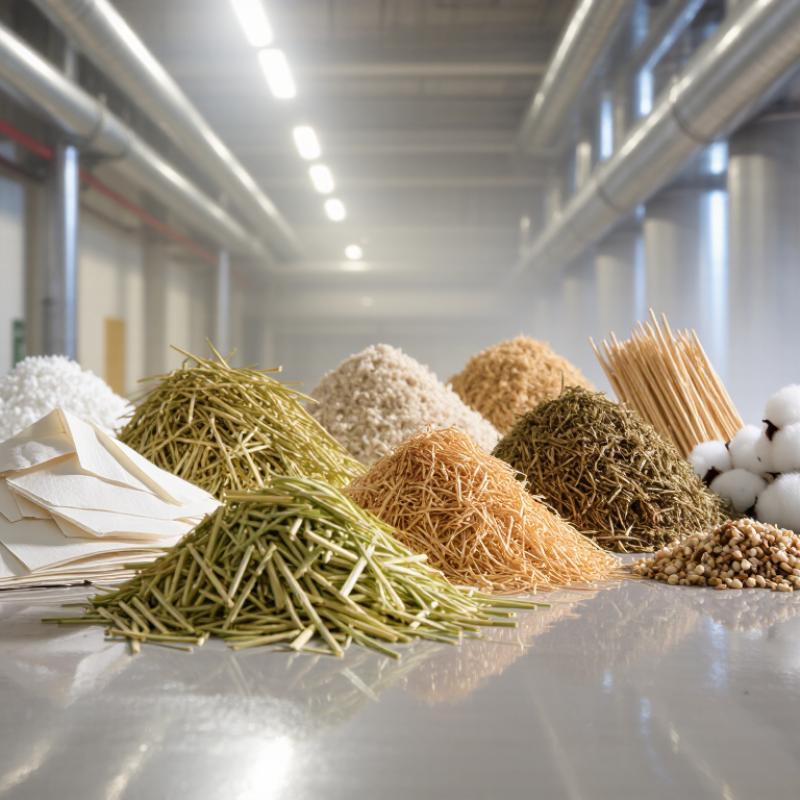
| 4 | Bamboo Pulp | Non-wood cellulose fiber | Cultivated bamboo processed into chemical or mechanical pulp | Acts as the main fiber or a blend component in tissue sheets | Good fiber strength, absorbency, and a smooth hand feel | Regrowth can be rapid, but cultivation, processing chemicals, and land management remain important factors |
| 5 | Bagasse Pulp | Agricultural-residue cellulose fiber | Fibrous residue remaining after sugarcane juice extraction | Provides an alternative non-wood fiber for tissue manufacture | Lightweight structure, absorbency, and adequate sheet formation when refined correctly | Uses an existing agricultural by-product and can reduce reliance on wood fiber |
| 6 | Wheat Straw Pulp | Agricultural-residue cellulose fiber | Wheat stalks left after grain harvesting | Serves as a non-wood fiber source, usually in blended or specialized products | Contributes absorbency and bulk; fiber quality depends on cleaning and pulping | Valorizes crop residue, although collection, silica content, and wastewater treatment must be managed |
| 7 | Hemp Pulp | Non-wood bast and hurd fiber | Industrial hemp stalks processed into cellulose pulp | Used as a specialty or blended fiber in tissue materials | Can provide strength, absorbency, and distinctive fiber bulk | Often requires fewer agricultural inputs than some conventional crops, but availability and processing infrastructure vary |
| 8 | Process Water | Manufacturing process input | Fresh water and treated process water used in stock preparation | Disperses fibers, transports pulp, and enables sheet formation | Controls fiber distribution, drainage, consistency, and final sheet quality | Closed-loop systems, water recycling, and effective effluent treatment reduce consumption and discharge |
| 9 | Starch-Based Strength Agent | Functional papermaking additive | Modified starch or other cellulose-compatible starch materials | Improves bonding between fibers during sheet formation | Enhances dry strength, handling performance, and resistance to tearing | Renewable and biodegradable options are available; dosage must be controlled to preserve softness |
| 10 | Softening and Debonding Agents | Functional tissue additive | Specialty surfactants, lotions, or debonders formulated for tissue applications | Reduces fiber-to-fiber bonding and improves surface feel | Increases softness, flexibility, and consumer comfort | Should be selected for skin compatibility, regulatory compliance, biodegradability, and low environmental persistence |



 08045479132
 Send Inquiry

 Send Inquiry
 Send SMS