Top 10 Types of Vegetable Seasoning Powder for Global Buyers
Global food manufacturers are rethinking how vegetables become convenient, flavorful ingredients. Vegetable Seasoning Powder now appears in soups, noodles, sauces, snacks, ready meals, and nutrition blends. Its value depends on more than taste. Buyers must examine aroma, color, solubility, particle size, sodium content, traceability, and application performance.
MarketsandMarkets estimates that the global food flavor market could grow from USD 9.6 billion in 2023 to USD 12.3 billion by 2028. This growth reflects stronger demand for convenient, differentiated food products. Innova Market Insights also identifies plant-based choices, clean labels, and simplified ingredient lists as major global food trends. These findings support wider interest in vegetable-based flavor systems. However, market categories often overlap. Powder, extract, seasoning blend, and flavoring data are not always comparable.
Dr. Kantha Shelke, a food scientist and principal at Corvus Blue LLC, has noted, “Clean label is not a legal or regulatory term.” That reminder matters. A short ingredient list does not automatically guarantee better quality. Buyers still need supplier audits, microbiological testing, allergen controls, country-specific documentation, and realistic shelf-life evidence.
This guide reviews the Top 10 Types of Vegetable Seasoning Powder for Global Buyers. It compares practical uses, flavor intensity, processing characteristics, and purchasing considerations. Some powders perform beautifully in dry mixes but disappoint in hot, wet applications. Others look attractive in samples yet lose aroma during storage. The right choice is rarely universal. It depends on the recipe, market, packaging, and supply chain.
Ingredient-Based Taxonomy: Classifying 10 Vegetable Seasoning Powder Types
Top 10 Types of Vegetable Seasoning Powder for Global Buyers
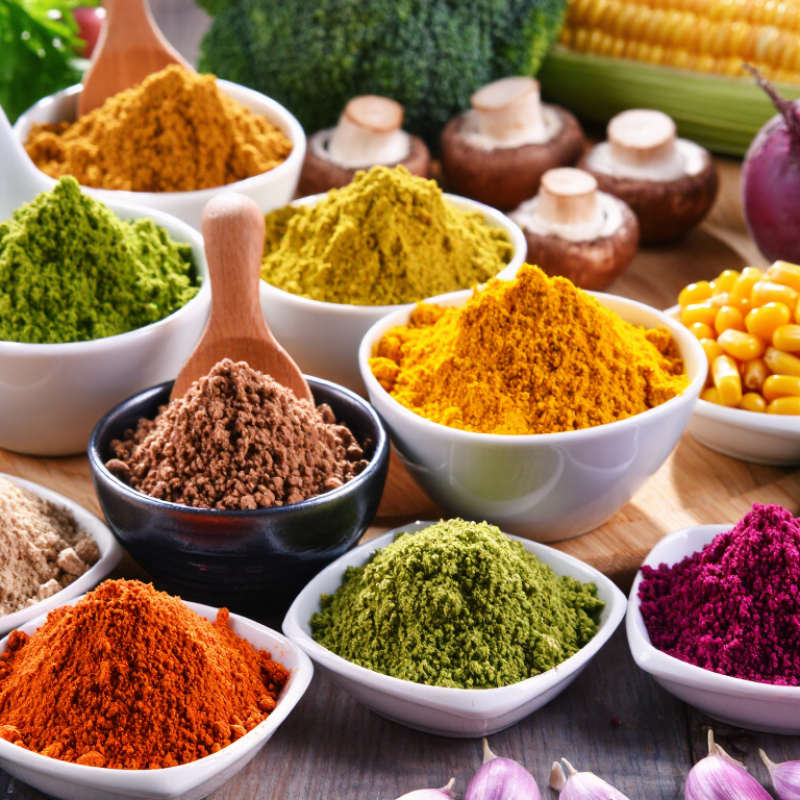
Ingredient-based taxonomy makes vegetable seasoning powders easier to compare. The ten main types are tomato, onion, garlic, carrot, celery, spinach, beetroot, pumpkin, bell pepper, and cabbage powders. Each ingredient creates a different flavor direction. Tomato powder adds acidity and savory depth. Onion and garlic powders provide strong aromatic notes. Carrot and pumpkin contribute mild sweetness and warm color. Spinach, beetroot, and cabbage offer distinctive vegetal profiles. Bell pepper brings gentle sweetness with a fresh pepper aroma. Celery powder is sharper and works well in soups and sauces.
In practical sourcing, I check the ingredient declaration before judging flavor strength. Some powders are pure vegetables, while others contain salt, starch, maltodextrin, or natural flavorings. That difference affects dosage and labeling. Particle size matters too. Fine powder disperses quickly in instant soup, while a larger mesh can show visible vegetable flecks. Moisture control is essential. Clumping often signals weak packaging or poor storage conditions. Supplier documentation should include microbial results, pesticide controls, origin records, and batch traceability.
The classification is useful, but not perfect. A tomato-onion blend can fit two categories at once. Processing also changes the result. Spray-dried powder may dissolve smoothly, while drum-dried powder can taste fuller. Buyers should test both in the final recipe, not only in a dry sample. Small details matter. A bright color may look attractive, yet excessive heat during drying can reduce fresh aroma.
Quality Metrics: Moisture ≤8%, Water Activity ≤0.60, and 40–100 Mesh
Top 10 Types of Vegetable Seasoning Powder for Global Buyers
Global buyers commonly source onion, garlic, tomato, carrot, spinach, celery, cabbage, beetroot, pumpkin, and mushroom powders. Each type behaves differently during drying, milling, and storage. Tomato and beetroot often absorb moisture quickly. Garlic and onion may cake when packaging seals are weak. In practical receiving checks, moisture at or below 8% is a useful purchasing target, not a universal legal limit. ISO 18787:2017 provides a recognized framework for measuring water activity.
Water activity matters more than moisture alone. A powder may pass an 8% moisture test yet remain unstable if its water activity is high. The FDA Food Code 2022 uses 0.85 aw as an important safety boundary for moisture-controlled foods. A target of aw ≤0.60 gives dried vegetable powders a stronger stability margin. It also helps reduce bacterial growth risks, although some yeasts and molds can tolerate lower values. Testing at 25°C is sensible, but temperature changes can shift results.
Particle size should be reported with the same discipline. A 40-mesh powder feels visibly coarse, while 100 mesh produces a smoother blend. Buyers should request sieve data, retained percentages, and test conditions. One imperfect sample can mislead. I still prefer three production-lot tests before approval, especially for hygroscopic powders. Packaging checks should include seal strength, liner condition, and visible caking after transport simulation.
Top 10 Types of Vegetable Seasoning Powder for Global Buyers - Quality Metrics: Moisture ≤8%, Water Activity ≤0.60, and 40–100 Mesh
| No. | Vegetable Seasoning Powder | Typical Color | Flavor Profile | Typical Moisture
Target | Water Activity
Target | Recommended
Particle Size | Common Global Applications |
| 1 | Onion Powder | Cream to pale beige | Sweet, savory, mildly pungent | 3.0–6.0% | 0.25–0.45 | 40–80 mesh | Seasoning blends, soups, sauces, snack coatings, meat products |
| 2 | Garlic Powder | White to light cream | Strong, savory, aromatic | 3.0–6.5% | 0.25–0.45 | 40–80 mesh | Marinades, spice mixes, instant foods, sauces, ready meals |
| 3 | Tomato Powder | Red to orange-red | Sweet-tart, umami-rich, distinctly tomato-like | 4.0–7.0% | 0.25–0.50 | 60–100 mesh | Soups, pasta sauces, savory beverages, snack seasonings, bakery mixes |
| 4 | Carrot Powder | Orange to yellow-orange | Mildly sweet, earthy, vegetable-like | 4.0–7.0% | 0.30–0.50 | 60–100 mesh | Soup bases, baby-food formulations, bakery products, sauces, seasoning blends |
| 5 | Spinach Powder | Green to dark green | Herbaceous, leafy, mildly earthy | 4.0–7.0% | 0.25–0.50 | 60–100 mesh | Pasta, bakery mixes, soups, sauces, nutrition-oriented dry blends |
| 6 | Pumpkin Powder | Yellow-orange to orange | Mildly sweet, nutty, earthy | 4.0–7.5% | 0.30–0.55 | 40–80 mesh | Soup mixes, bakery products, beverage powders, sauces, seasonal foods |
| 7 | Beetroot Powder | Red to purple-red | Earthy, mildly sweet, characteristic beet flavor | 4.0–7.0% | 0.25–0.50 | 60–100 mesh | Dry beverage mixes, sauces, bakery products, seasoning blends, natural color systems |
| 8 | Celery Powder | Pale green to greenish beige | Distinctly vegetal, savory, slightly bitter | 3.5–6.5% | 0.25–0.45 | 40–80 mesh | Stock powders, soups, sauces, savory snacks, meat and plant-based products |
| 9 | Bell Pepper Powder | Red, green, or yellow according to raw material | Sweet, fresh, mildly vegetal | 4.0–7.0% | 0.30–0.50 | 40–80 mesh | Snack coatings, spice blends, sauces, soups, instant noodle seasonings |
| 10 | Mushroom Powder | Light beige to brown | Umami-rich, earthy, savory | 4.0–7.5% | 0.30–0.55 | 40–80 mesh | Umami blends, soups, gravies, sauces, plant-based meat products |



 08045479132
 Send Inquiry

 Send Inquiry
 Send SMS