Top 10 Abc Cable Manufacturers for Global Buyers?
Choosing the right Abc Cable manufacturer can shape a project’s safety, budget, and delivery schedule. Global buyers often compare suppliers by price alone. That approach can create expensive problems later. A cable may look identical in a product image, yet differ in conductor quality, insulation thickness, testing, and traceability.
This guide reviews ten Abc Cable manufacturers serving international buyers. The evaluation considers production capacity, material control, certification practices, customization, export experience, and after-sales support. It also examines practical details, such as factory testing records, sample consistency, packaging strength, and response times during technical discussions. These details matter when cables travel across long distances or operate in demanding environments.
Quality comes first.
Reliable manufacturers should explain their standards clearly. They should provide verifiable documents, not vague promises. Buyers should also confirm voltage ratings, conductor materials, temperature limits, and applicable regional requirements before placing an order. One supplier may excel at large infrastructure projects, while another may handle smaller customized batches more effectively. There is no perfect manufacturer for every buyer.
Some rankings remain subjective. Market information can change, and public company data is not always complete. Therefore, this overview should support supplier research rather than replace factory audits or independent testing. Careful buyers will request samples, review inspection procedures, and clarify warranty terms before signing contracts. A short conversation with an engineer may reveal more than a polished brochure.
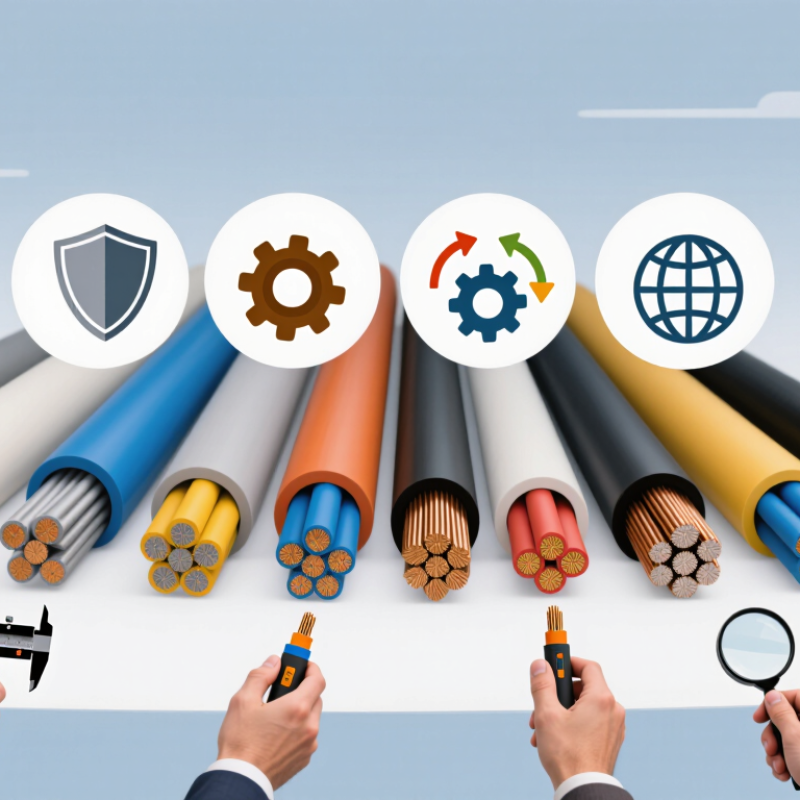
ABC Cable: Definition, Applications, and Global Market Overview
ABC cable, or aerial bundled cable, groups insulated conductors around a supporting messenger or neutral. Unlike bare overhead lines, its compact profile reduces accidental contact and branch interference. Utilities use it for dense streets, rural extensions, service drops, and network upgrades. The design also limits corridor width. Yet insulation does not remove every hazard; installation quality still controls performance.
The global need is substantial. The World Bank’s Tracking SDG7: Energy Progress Report 2024 recorded about 685 million people without electricity in 2022. Many new connections need affordable, low-maintenance distribution. The IEA’s Electricity 2024 analysis expects worldwide electricity demand to grow by an average 3.4% yearly through 2026. This growth increases pressure on secondary networks, especially where poles face storms, vegetation, or crowded roads. Market forecasts differ because analysts classify ABC, insulated overhead conductors, and accessories differently. That inconsistency deserves attention.
Tips: Global buyers should verify conductor material, insulation rating, messenger strength, voltage class, UV resistance, and local installation standards. Ask for routine-test records and declared current capacity. Compare lifecycle cost, not only purchase price. Inspect connector compatibility, too. A strong cable can still fail at a weak joint. ABC is efficient, but not magical. Designers should allow for heat, wind, sag, and future load. One overlooked detail can erase the expected savings.



 08045479132
 Send Inquiry

 Send Inquiry
 Send SMS