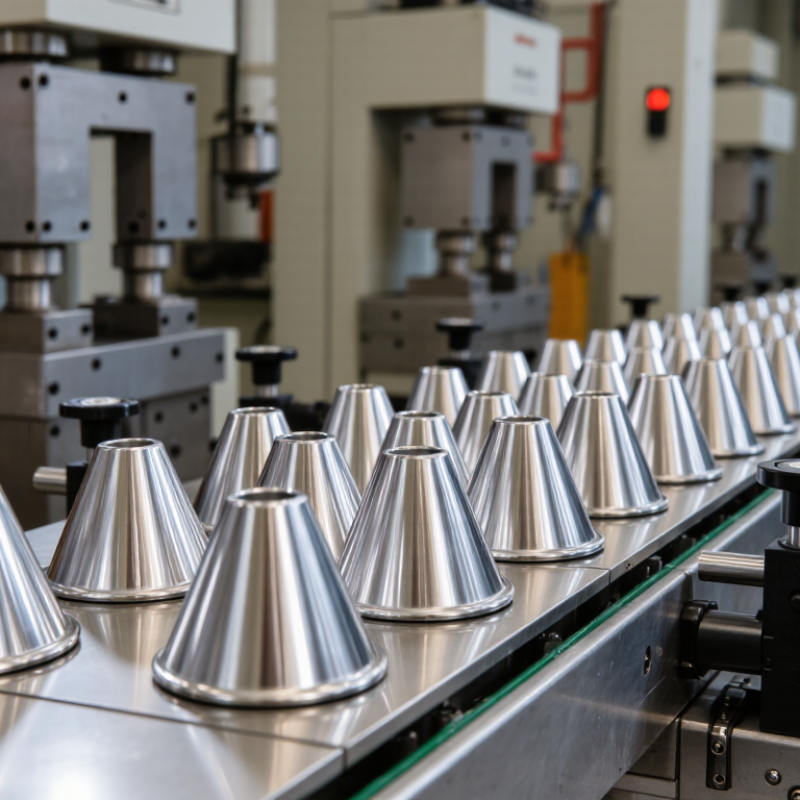
| Standard Cone | Connects the can body to the valve cup and guides the actuator and valve assembly. | Tinplate, electrolytic chromium-coated steel, or aluminum. | Deep drawing, forming, trimming, curling, and compound flanging. | Designed for nominal can diameters of approximately 35–76 mm. | Accurate valve-cup fit, stable flange, good dimensional repeatability, and compatibility with crimped valve systems. | Personal care, household products, air fresheners, and general industrial aerosols. |
| Low-Profile Cone | Reduces the overall package height while providing the required valve and actuator interface. | Aluminum or tinplate, selected according to pressure and corrosion requirements. | Progressive forming or deep drawing with controlled neck and flange geometry. | Generally used on short packages with can diameters of approximately 45–65 mm. | Compact appearance, lower material usage, efficient palletization, and controlled valve alignment. | Travel-size products, compact personal-care aerosols, and promotional packaging. |
| High-Neck Cone | Provides additional clearance around the actuator and supports tall or specialized valve assemblies. | Tinplate or aluminum with an internal or external protective coating when required. | Multi-stage drawing, necking, curling, and precision flanging. | Typically used with can diameters of approximately 45–76 mm. | Increased actuator clearance, improved component separation, and suitability for specialized dispensing systems. | Foaming products, cosmetic mousses, technical sprays, and products requiring elevated valve geometry. |
| Decorative Cone | Combines the structural function of a cone with a visible surface for printed or embossed decoration. | Pre-printed tinplate, coated steel, or lacquered aluminum. | Forming after printing or coating, followed by trimming, curling, and flange forming. | Available for many standard can diameters, commonly approximately 45–76 mm. | High visual impact, controlled print registration, scratch resistance, and compatibility with retail packaging. | Beauty, personal care, household, and branded consumer aerosol products. |
| Standard Dome | Closes the lower end of the can and distributes internal pressure into the can wall. | Tinplate or aluminum; coating selection depends on product compatibility. | Deep drawing, doming, trimming, curling, and bottom-profile forming. | Commonly matched to can diameters of approximately 35–76 mm. | Pressure resistance, stable bottom geometry, reliable attachment to the can body, and efficient load distribution. | Most pressurized aerosol products, including sprays, foams, and mists. |
| Pressure-Optimized Dome | Improves resistance to internal pressure and helps maintain package integrity during filling, storage, and transport. | Steel or aluminum with controlled thickness and protective internal coating. | Precision deep drawing with optimized radius, base profile, and dimensional controls. | Selected according to can diameter and required working pressure; commonly approximately 45–76 mm. | Enhanced buckling resistance, controlled stress distribution, and suitability for higher-pressure formulations. | Industrial sprays, high-pressure personal-care products, and technical formulations. |
| Concave-Base Dome | Creates a recessed base that can improve stability, clearance, and interaction with packaging equipment. | Tinplate or aluminum with a suitable internal lacquer. | Deep drawing and controlled concave-base forming, followed by trimming and curling. | Typically produced for can diameters of approximately 45–65 mm. | Improved standing stability, protected bottom profile, and compatibility with automated handling lines. | Consumer aerosols, air fresheners, and products requiring stable shelf presentation. |
| Specialty Dome for Aggressive Formulations | Provides pressure closure while minimizing contact between the formulation and the metal substrate. | Aluminum or steel with an internally applied protective lacquer or laminate. | Forming followed by controlled internal coating, curing, inspection, and dimensional testing. | Manufactured in sizes matched to the can body, commonly approximately 45–76 mm. | Improved corrosion protection, coating adhesion, chemical resistance, and pressure retention. | Acidic, alkaline, solvent-based, or otherwise chemically demanding aerosol formulations. |
| Cone and Dome with Protective Coating | Provides the required structural part while protecting the metal from formulation-related corrosion. | Coated tinplate, coated steel, or lacquered aluminum. | Metal forming, internal or external coating, thermal curing, and coating inspection. | Available across common aerosol body diameters, approximately 35–76 mm. | Coating uniformity, strong adhesion, low porosity, product compatibility, and extended shelf-life potential. | Products containing water, alcohol, fragrances, solvents, or corrosion-sensitive ingredients. |
| Custom-Profile Cone or Dome | Adapts the aerosol package to a specific valve, actuator, body diameter, appearance, or filling-line requirement. | Steel or aluminum selected after pressure, compatibility, and forming evaluations. | Customer-specific tooling, multi-stage forming, trimming, curling, coating, and inspection. | Determined by the package design; common body diameters remain approximately 35–76 mm. | Tailored valve fit, unique appearance, optimized material usage, and integration with dedicated production equipment. | Specialty cosmetics, medical products, technical aerosols, and differentiated package designs. |



 08045479132
 Send Inquiry

 Send Inquiry
 Send SMS