Top UV Flatbed Printer Features and Benefits for Buyers?
The UV Flatbed Printer has rapidly gained traction in various industries, thanks to advancements in technology and material customization. According to Smithers Pira's recent report, the UV printing market is expected to grow from $4.6 billion in 2020 to $7.4 billion by 2026, demonstrating a compound annual growth rate of 8.6%. This impressive growth highlights the increasing demand for high-quality printing solutions that UV flatbed printers offer.
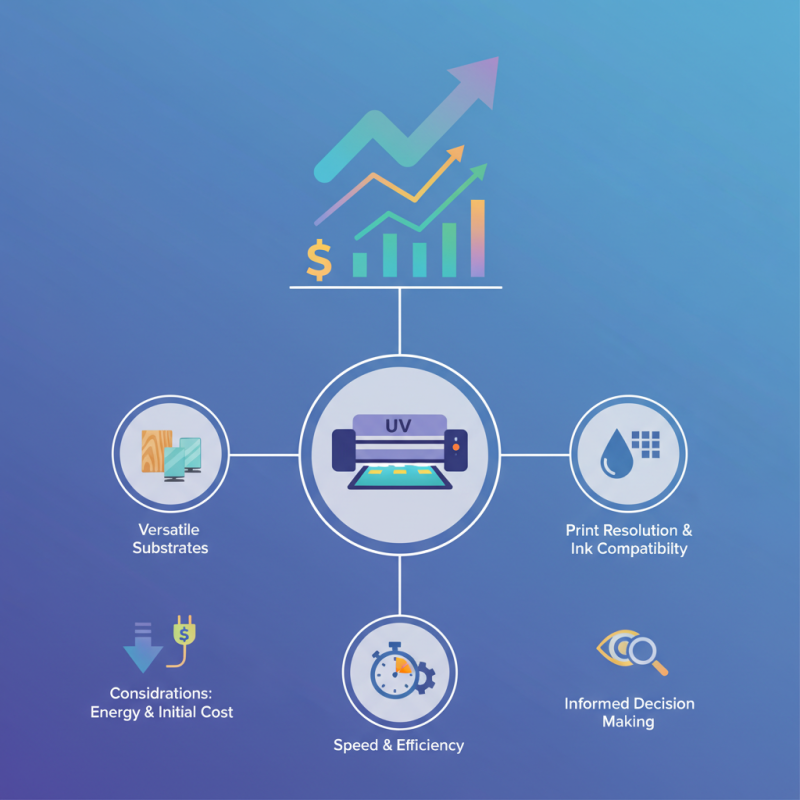
These printers stand out due to their versatility and efficiency. They can print on numerous substrates, including wood, glass, metal, and plastics. This capability allows businesses to expand their product offerings while maintaining quality. However, potential buyers must consider energy consumption and initial costs. Not every UV flatbed printer delivers the same performance; careful research is essential.
In this evolving market, buyers should focus on specific features. Important aspects include print resolution, speed, and compatibility with various inks. With the right knowledge, businesses can make informed decisions, ensuring they invest wisely in technologies that drive growth. Understanding these features will ultimately lead to better printing results and improved customer satisfaction.
Key Features of Top UV Flatbed Printers: An Overview
When considering UV flatbed printers, key features significantly impact their performance. One of the most important features is the print resolution. High-resolution capabilities allow for crisp, detailed images. This is essential for projects that require vibrant colors and sharp text. Moreover, versatility in media handling is crucial. Top printers can accommodate various materials, from wood to glass, expanding creative possibilities.
Durability of the printer’s components also plays a vital role. Robust build quality ensures longevity and less frequent maintenance. Buyers often look for printers with reliable UV curing technology. This feature enhances ink adhesion, making the prints resistant to scratches and chemicals. Ease of use is another factor to consider. Intuitive interfaces and user-friendly software simplify operations, making it accessible even for beginners.
However, it is essential to acknowledge that not all features may be necessary for every user. Some may prioritize speed over versatility. Others might focus on cost-effectiveness rather than maximum print quality. Reflecting on your specific needs will guide you in making an informed decision. Each printing business has unique requirements, so evaluating what matters most is critical.
Advantages of UV Printing: Speed, Quality, and Versatility
UV printing technology stands out for its speed, quality, and versatility. This method cures inks instantly using ultraviolet light, allowing for rapid production. Jobs that once took hours can now be completed in minutes. This efficiency is crucial for businesses needing quick turnaround times.
Quality is another key benefit. UV printers produce sharp, vibrant images. The inks adhere well to various surfaces, ensuring durability. This makes them ideal for diverse applications, from signage to customized products. However, some users may notice slight variations in color accuracy compared to traditional methods. This is an area for improvement, emphasizing the need for careful calibration.
Versatility is a significant advantage of UV printing. It can print on various materials, including wood, metal, glass, and plastic. This adaptability opens new opportunities for creative designs. When considering a UV printer, here are some tips: always assess the material compatibility. Additionally, evaluate the maximum print size and speed. Understand your specific needs to make an informed decision.
Investing in UV printing technology can transform your production process. However, reflect on the potential challenges of adjusting to a new system. Continuous learning is essential to maximize the benefits of UV printing.
Top UV Flatbed Printer Features and Benefits for Buyers
| Feature | Benefit |
| High Speed Printing | Reduces turnaround time, increases productivity for businesses. |
| Superior Print Quality | Delivers vibrant colors and fine details suitable for various applications. |
| Versatile Material Compatibility | Can print on a wide range of materials, including wood, glass, and metals. |
| Eco-Friendly Inks | Low VOC emissions, making it safer for the environment. |
| Cost-Effective | Reduces waste and lowers production costs in the long run. |
| Integrated UV LED Technology | Faster curing times compared to traditional methods, enhancing workflow efficiency. |
| User-Friendly Interfaces | Simplifies operation for users, minimizing training time. |
Evaluating Print Quality: DPI and Color Accuracy Standards
When considering UV flatbed printers, evaluating print quality is paramount. DPI (dots per inch) and color accuracy are critical metrics. High DPI settings allow for intricate detail. Typically, a DPI of 1200 can yield exceptional results for most applications. According to industry research, optimal color reproduction centers around achieving at least 90% of the Pantone color spectrum. Devices meeting this standard are essential for professional applications.
However, it's crucial to recognize potential shortcomings. Some printers may boast high DPI, but they may lack consistency in color accuracy. This inconsistency can lead to discrepancies in final products. A study from a leading print industry analyst showed that 30% of businesses experienced color mismatches in flatbed printing. This highlights the importance of reliable calibration and regular maintenance. A solid particle paper can also result in different output quality. Understanding the materials used is as vital as the printer’s specifications.
Color management systems play a significant role. They ensure that colors remain true across different materials. Still, these systems require hands-on expertise. A survey indicated that 25% of users were not fully trained on these systems. This lack of proficiency can lead to errors, impacting overall print quality. Buyers must consider these factors seriously to maximize their investment in UV flatbed technology.
Cost Considerations: Initial Investment vs. Long-term Savings
Investing in a UV flatbed printer can be a significant decision. The initial investment is often daunting. However, buyers must weigh this against potential long-term savings. Digital printing technology often reduces materials waste. This can lead to lower production costs over time.
Tip: Always calculate your break-even point. Understanding how long it will take to recoup your investment is crucial. This will help you make informed decisions.
Maintenance costs are another factor. Quality printers may have higher upfront prices, but they often require less frequent maintenance. This leads to greater reliability and lower operational costs in the long run. Choosing the right printer can ultimately influence your bottom line.
Tip: Research the total cost of ownership, not just the initial price. Look at factors like energy consumption and replacement parts. These can add up over time and affect your profitability. Consider how each feature can contribute to your business goals. Keep an eye on how these aspects align with your budget and production needs.
Market Trends: Growth Projections for UV Flatbed Printer Industry
The UV flatbed printer industry is experiencing notable growth. In recent years, businesses have increasingly adopted these printers for their versatility. The demand for high-quality printing on various materials drives this trend. Users seek printers that provide vibrant colors and durable finishes. As technology evolves, manufacturers are introducing more advanced features. These developments allow for better printing capabilities and efficiency.
Market projections indicate a steady rise in the flatbed printer sector. Analysts expect a compound annual growth rate of around 5% over the next few years. This growth aligns with a heightened focus on sustainable and eco-friendly printing solutions. Many companies are investing in UV technology to meet market demands. Customization is becoming a significant selling point. Consumers want unique, tailored items. This can pose challenges for businesses in terms of production time and costs.
Though the outlook is positive, manufacturers must navigate various hurdles. Maintaining quality while expanding production can be tricky. Businesses must also stay informed about changing technologies. Integrating new features without overwhelming users is essential. Key players in the industry need to listen to customer feedback. This ongoing dialogue can drive innovation and relevance in a competitive market. Challenges today could lead to insights for tomorrow.



 08045479132
 Send Inquiry

 Send Inquiry
 Send SMS