| 1 | Lever-Arm Paper Guillotine | Paper and cardstock | Working width: approximately 300–450 mm
Stack height: commonly 10–80 mm, depending on paper weight | A manually operated blade descends through a clamped paper stack. | About ±0.5–1.0 mm with a properly aligned back gauge | Office documents, digital print finishing, booklets, flyers, and small paper batches | Check blade safety guard, clamp design, back-gauge scale, replacement blade availability, and maximum stack height. |
| 2 | Rotary Paper Trimmer | Paper, film, and photographs | Working width: approximately 300–1300 mm
Best suited to single sheets or light stacks | A circular blade rolls along a guide rail for a straight or perforated cut. | About ±0.5–1.0 mm on correctly positioned sheets | Graphic design, photo trimming, labels, lightweight packaging, and classroom or studio work | Select a self-sharpening or replaceable blade, transparent guide, metric scale, and a stable cutting mat or base. |
| 3 | Manual Fabric Rotary Cutter | Textiles and felt | Typical blade diameter: 45–60 mm
Usually cuts one or several light fabric layers | A circular blade is guided by hand along a ruler, template, or cutting mat. | Often within ±1–2 mm when used with a straightedge | Garment samples, quilting, upholstery patterns, felt products, and textile prototyping | Consider blade diameter, ergonomic grip, safety lock, replacement blade cost, and compatibility with self-healing mats. |
| 4 | Leather Strap and Belt Cutter | Leather and rubber sheet | Typical strip width: approximately 5–100 mm
Material thickness: commonly up to 3–5 mm | A fixed blade or adjustable slitting blade produces repeatable strips. | Typically ±0.5–1.5 mm in strip width | Belts, bag handles, leather cords, straps, gaskets, and craft components | Verify width-adjustment range, blade hardness, material-feed stability, clamping method, and suitability for vegetable-tanned or soft leather. |
| 5 | Manual Vinyl and Film Slitter | Adhesive vinyl and plastic film | Roll or sheet width: approximately 300–1600 mm
Designed for thin flexible materials | A guided rotary or fixed blade slits the material into strips or trims its edges. | Typically ±1–2 mm, depending on material tension | Sign-making, window film, protective film, label stock, and flexible packaging samples | Look for smooth material feeding, adjustable blade pressure, anti-static features, roll-width compatibility, and clean edge performance. |
| 6 | Foam Board and Mat Cutter | Foam board and corrugated board | Board thickness: commonly 3–10 mm
Guide length: approximately 600–1500 mm | A guided knife makes a straight, bevel, or angled cut through the board. | Approximately ±1 mm with a rigid guide rail | Display boards, architectural models, framing mats, exhibition graphics, and prototypes | Check maximum board thickness, 45-degree bevel capability, guide rigidity, blade depth adjustment, and replacement blade supply. |
| 7 | Manual Cardboard and Corrugated Cutter | Cardboard and corrugated board | Working width: approximately 500–1300 mm
Usually handles single-wall corrugated sheets | A rotary wheel or scoring-and-cutting blade follows a straight guide. | Typically ±1–3 mm, depending on board flatness | Packaging prototypes, carton samples, retail displays, and low-volume box production | Confirm flute compatibility, cutting depth, scoring options, guide scale readability, and the machine's ability to handle warped sheets. |
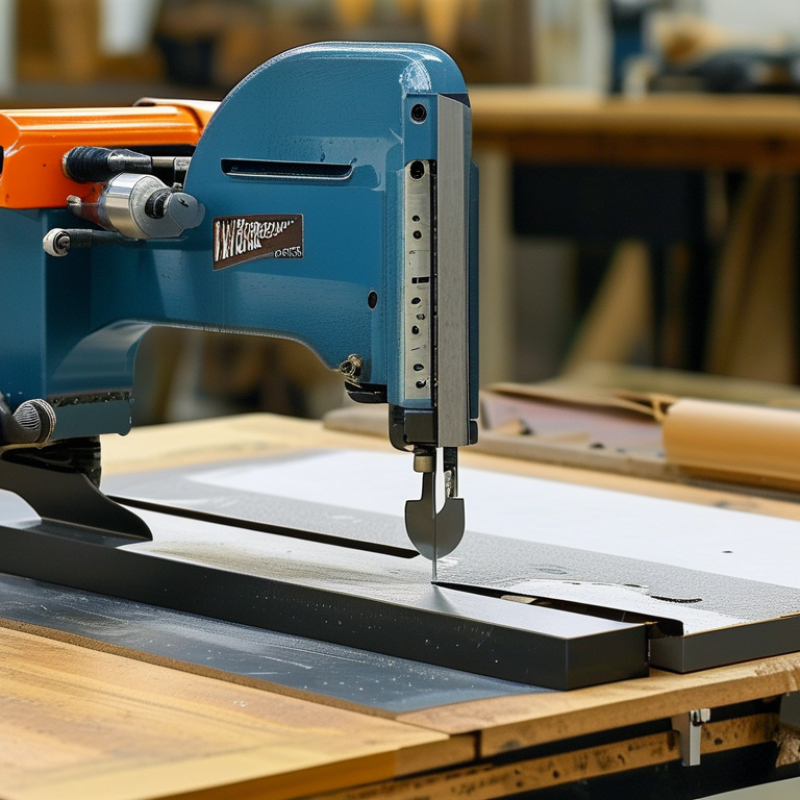
| 8 | Manual Sheet-Metal Shear | Aluminum and mild steel | Typical cutting length: 300–1300 mm
Capacity: approximately 0.5–1.5 mm mild steel or 1–2 mm aluminum | A lever-operated upper blade shears sheet metal against a fixed lower blade. | Usually ±0.5–1.5 mm for straight cuts with a back gauge | HVAC work, metal fabrication, roofing, signage, repair work, and workshop projects | Check rated capacity by metal type, blade length, hold-down clamp, back gauge, guarding, mounting stability, and required operating force. |
| 9 | Manual Plastic Sheet Cutter | Acrylic, PVC, and polycarbonate | Typical sheet thickness: approximately 1–6 mm
Suitable for scoring and controlled break-off | A carbide scoring wheel or knife creates a groove before the sheet is snapped or finished. | Approximately ±1 mm for straight scored cuts | Signs, glazing panels, equipment covers, model making, and plastic fabrication | Select a tool matched to the polymer, verify maximum thickness, use a straight guide, and consider edge-finishing requirements. |
| 10 | Manual Tile and Mosaic Cutter | Ceramic and porcelain tile | Cutting length: approximately 400–1200 mm
Common tile thickness: 6–16 mm | A tungsten-carbide or carbide-tipped scoring wheel scores the glaze before the tile is separated by pressure. | Typically ±1–2 mm for straight cuts | Wall tile, floor tile, renovation work, bathroom installation, and small construction projects | Check scoring-wheel diameter, maximum diagonal cut, base rigidity, breaker strength, porcelain capability, and availability of replacement wheels. |



 08045479132
 Send Inquiry

 Send Inquiry
 Send SMS