| Evaporative Condenser | Refrigerant or process fluid rejects heat directly to a wetted coil. Fans move air across recirculated spray water, and evaporation removes most of the heat. | Approximately 1.5–2.5 L of evaporated water per hour for each 1 kW of heat rejection, plus blowdown and drift losses. Actual use depends on climate, cycles of concentration, and load. | Often suitable for medium- to large-capacity refrigeration and industrial heat-rejection systems; leaving condensing temperatures can approach ambient wet-bulb temperature plus a design approach. | Lower condensing temperature than many dry systems; generally lower fan energy and smaller footprint than comparable air-cooled equipment; reduced water demand compared with open once-through cooling. | Requires water treatment, basin cleaning, drift control, freeze protection in cold climates, and controls for biological fouling and scale. | Cold storage, food processing, industrial refrigeration, data-center heat rejection, and facilities with limited site area but reliable make-up water. |
| Hybrid Wet/Dry Condenser | Combines dry heat exchange with evaporative sections or spray assistance. The controller selects dry, adiabatic, or wet operation according to outdoor temperature, load, and water availability. | Typically uses little or no water during cool or moderate conditions. Annual water savings can commonly reach 30–80% versus continuously wet operation, depending on climate, control strategy, and load profile. | Suited to variable-load systems where dry operation is acceptable for part of the year and evaporative assistance is needed during peak wet-bulb conditions. | Strong water-saving potential; flexible operation; improved peak-summer performance compared with dry-only systems; can reduce plume formation when operated in dry mode. | Higher controls and equipment complexity; larger capital cost than a basic dry or wet unit; dry-mode fan energy and sound levels may increase during hot weather. | Water-stressed regions, commercial buildings, data centers, manufacturing plants, and sites with seasonal or variable cooling loads. |
| Closed-Circuit Evaporative Cooler | The process fluid remains inside a closed coil while external spray water evaporates over the coil and air removes the heat. The process loop is isolated from the basin water. | Water is consumed mainly through evaporation, drift, and blowdown. It is generally lower in contamination risk for the process loop than an open cooling-water arrangement. | Suitable for process cooling, condenser-water circuits, and applications requiring a clean or protected closed fluid loop. | Reduces process-side fouling and corrosion exposure; supports stable fluid quality; can provide evaporative performance with a closed process circuit. | Coil-side pressure drop and pump energy must be considered; spray-water treatment and regular inspection remain necessary. | Industrial process cooling, HVAC condenser-water loops, power-related auxiliary cooling, and systems where fluid contamination must be minimized. |
| Open Evaporative Cooling Tower with Surface Condenser | An open cooling tower cools circulating condenser water by evaporation. The cooled water then flows through a separate surface condenser to reject heat from the refrigerant or process fluid. | Water consumption consists of evaporation, blowdown, and drift. With effective water treatment and higher cycles of concentration, blowdown can be reduced, but evaporation remains unavoidable. | Well suited to large central plants and continuous industrial loads; performance is strongly influenced by entering wet-bulb temperature and tower approach. | Scalable; efficient for large heat loads; allows condenser and tower equipment to be selected and maintained separately; commonly used for central chilled-water systems. | More pumps and components than an integrated evaporative condenser; open water circuit requires ongoing treatment, filtration, cleaning, and drift management. | Large commercial HVAC plants, district cooling, industrial facilities, and installations with sufficient space for cooling towers and water-treatment equipment. |
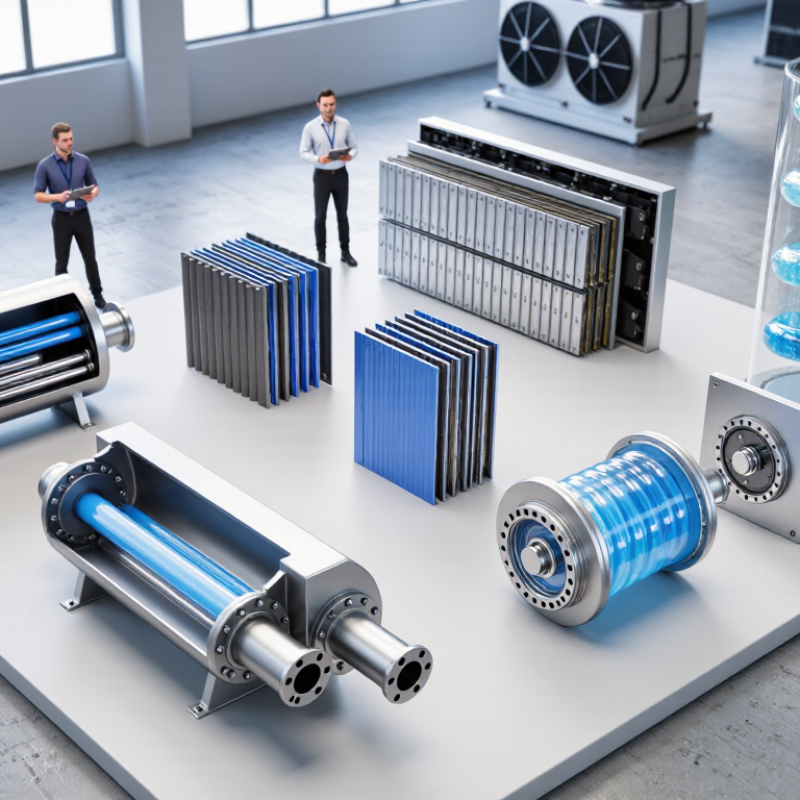
| Water-Cooled Shell-and-Tube Condenser | Refrigerant condenses on one side of a tube bundle while cooling water flows through the tubes. The water must be cooled separately by a cooling tower, dry cooler, or other heat sink. | The condenser itself does not consume water, but the connected cooling system may consume water if an open evaporative tower is used. A closed or dry heat sink can substantially reduce direct water use. | Common for medium- to large-capacity chillers, refrigeration systems, and industrial duties where stable water-side heat transfer is available. | Compact heat-transfer surface; predictable operation; accessible mechanical design; can achieve low condensing temperatures with properly designed cooling water. | Tube scaling, corrosion, biological fouling, pressure drop, and water-treatment requirements can reduce performance; water use depends on the upstream heat-rejection system. | Central chilled-water plants, industrial refrigeration, process cooling, and facilities with an existing treated condenser-water loop. |
| Water-Cooled Plate-and-Frame Condenser | Thin corrugated plates create alternating refrigerant and water channels. Turbulent flow across the plates provides high heat-transfer efficiency in a compact package. | No direct consumption inside the condenser; water demand is determined by the connected cooling-water source, such as a cooling tower, closed loop, or reclaimed-water system. | Effective for compact, low- to medium-capacity systems and selected larger systems when pressure drop, refrigerant compatibility, and service requirements are properly evaluated. | Small footprint; high heat-transfer coefficient; relatively low refrigerant charge in many designs; capacity can be adjusted by adding or removing plates in serviceable configurations. | Narrow channels are sensitive to dirt and scale; gasketed designs require compatible materials and correct assembly; pressure drop can be higher than in some shell-and-tube designs. | Compact HVAC equipment, process skids, heat pumps, refrigeration packages, and installations with clean, well-filtered cooling water. |



 08045479132
 Send Inquiry

 Send Inquiry
 Send SMS