Why Is Air Conditioning Important for Global Buyers?
Air Conditioning has become a basic infrastructure question for global buyers, not merely a comfort upgrade. In a crowded hotel room, overheated warehouse, or small apartment, a reliable cooling system protects people, products, and daily operations. The International Energy Agency’s The Future of Cooling report estimates that space-cooling demand could more than triple by 2050. It also projects global air-conditioner ownership could rise from about 2.3 billion units today to 5.6 billion units by 2050.
The stakes are practical. Buyers must compare cooling capacity, seasonal efficiency, refrigerant type, noise levels, maintenance access, and performance in humid climates. A low purchase price may become expensive when electricity, spare parts, and service visits accumulate. The IEA identifies cooling as one of the fastest-growing sources of electricity demand worldwide. Meanwhile, the 2023 UNEP Global Status Report for Buildings and Construction states that buildings consume approximately 30% of global final energy. These figures show why equipment selection affects both operating budgets and environmental performance.
International buyers also need evidence beyond marketing claims. ISO 5151 testing, regional energy labels, and verified performance data can support more reliable comparisons. Yet laboratory ratings may not represent every building, climate, or installation. That gap matters. Experienced procurement teams should request test conditions, warranty terms, lifecycle cost estimates, and local service capabilities. The market is not simple. Still, informed buyers can choose Air Conditioning systems that deliver dependable comfort, controlled energy use, and safer long-term investment.
What Is Air Conditioning and How Does It Work?
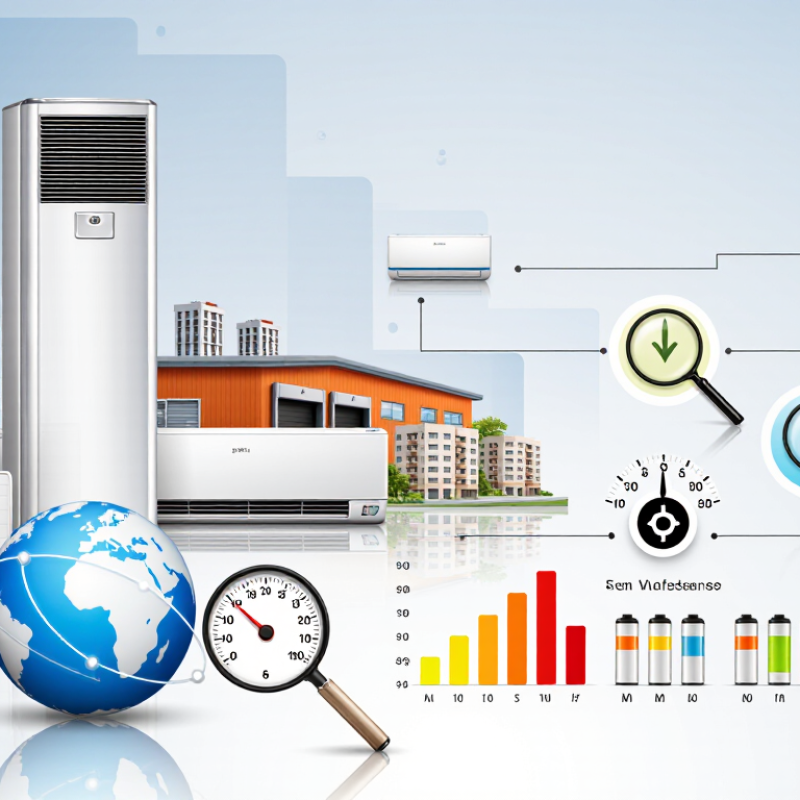
Air conditioning is a controlled process that removes heat from indoor air. It can also reduce humidity and improve comfort. The system does not create cold air from nothing. Instead, it moves heat outdoors through a refrigeration cycle.
Inside the indoor unit, a cold evaporator coil absorbs heat from room air. A fan pushes that air across the coil and returns cooler air through the vents. The refrigerant changes into gas as it collects heat. Then, the compressor raises its pressure and temperature. The hot refrigerant travels to the outdoor condenser coil. There, outdoor air carries the heat away. The refrigerant becomes liquid again and passes through an expansion device. Its pressure falls sharply, preparing it for another cycle. That is the basic mechanism.
It sounds simple.
Yet installation conditions matter greatly. A dusty filter can restrict airflow and increase energy use. Poor insulation may also waste cooling before air reaches the room. Global buyers should check climate, voltage, humidity, room size, and local efficiency requirements. A system designed for a dry region may perform differently in a humid coastal area. Oversized equipment can cool quickly but remove less moisture. Undersized equipment may run continuously on hot days. These trade-offs are easy to overlook. Regular cleaning and qualified servicing help protect performance, although no system remains perfect without proper operation.
Why Air Conditioning Matters in Homes, Offices, and Public Buildings
Air conditioning matters because indoor comfort affects how people live, work, and recover. In homes, stable temperatures can support sleep during hot nights. Proper humidity control also helps reduce damp smells and surface condensation. Yet colder is not always better. An overcooled bedroom may feel dry, uncomfortable, and wasteful.
Offices need more than cool air. Temperature, airflow, filtration, and noise levels influence concentration and daily productivity. A meeting room with poor ventilation can feel stuffy within minutes. In practical building assessments, uneven cooling often causes complaints near windows and crowded desks. Good system design should consider room size, sunlight, occupancy, and local climate. Small details matter.
Public buildings face even greater demands. Schools, clinics, transport facilities, and shopping spaces may serve thousands of people each day. Their systems require dependable controls, accessible maintenance, and clear safety procedures. Buyers should examine seasonal efficiency, replacement access, operating costs, and local technical support. Independent testing and qualified installation add confidence. Still, performance can decline when filters are neglected or controls are poorly understood. That part is easy to overlook. A reliable purchasing decision balances comfort, health, energy use, and long-term maintenance rather than focusing only on the lowest initial price.
How Climate, Energy Use, and Technology Shape Air Conditioning Choices
Why Is Air Conditioning Important for Global Buyers?
Air conditioning choices begin with climate, not room size alone. In humid coastal regions, systems must remove moisture without making rooms uncomfortably cold. Dry, hot climates demand strong heat rejection and reliable airflow. Seasonal areas may need heating during cool months, making reversible heat-pump systems more practical. A local load assessment should consider sunlight, insulation, occupancy, and window direction. Guessing from floor area alone often produces disappointing results.
Energy use also shapes long-term value. Efficient equipment can reduce electricity demand, but efficiency ratings differ across markets. Buyers should compare seasonal performance data, not only advertised cooling capacity. Inverter-driven compressors usually adjust output instead of cycling at full power. This can improve comfort in a bedroom or office. Small errors matter. Poor installation, blocked filters, or incorrect refrigerant charges can erase expected savings. Maintenance access deserves attention before purchase, especially in dusty or remote locations.
Technology adds useful control, but it is not automatically better. Sensors can detect occupancy and adjust temperature, while timers reduce unnecessary overnight cooling. Remote monitoring may help facility managers identify unusual energy patterns. However, connected features depend on stable networks and trained technicians. A simple control panel may outperform a sophisticated system that nobody understands. I have seen projects focus heavily on equipment specifications while overlooking duct leakage and user habits. That is an uncomfortable lesson. Climate data, energy prices, service skills, and daily routines should guide the final decision.
Why Is Air Conditioning Important for Global Buyers?
Global cooling demand is shaped by warmer climates, rising electricity use, and the need for more efficient air-conditioning technology.
Key insight: Global space-cooling electricity demand roughly doubled between 1990 and 2016 and could more than triple again by 2050 without major efficiency improvements. Buyers should therefore compare climate suitability, energy performance, refrigerant regulations, and smart-control capabilities when selecting air-conditioning systems.
Source: International Energy Agency, The Future of Cooling (2018). Values are rounded; 2050 represents the report’s stated projection.



 08045479132
 Send Inquiry

 Send Inquiry
 Send SMS