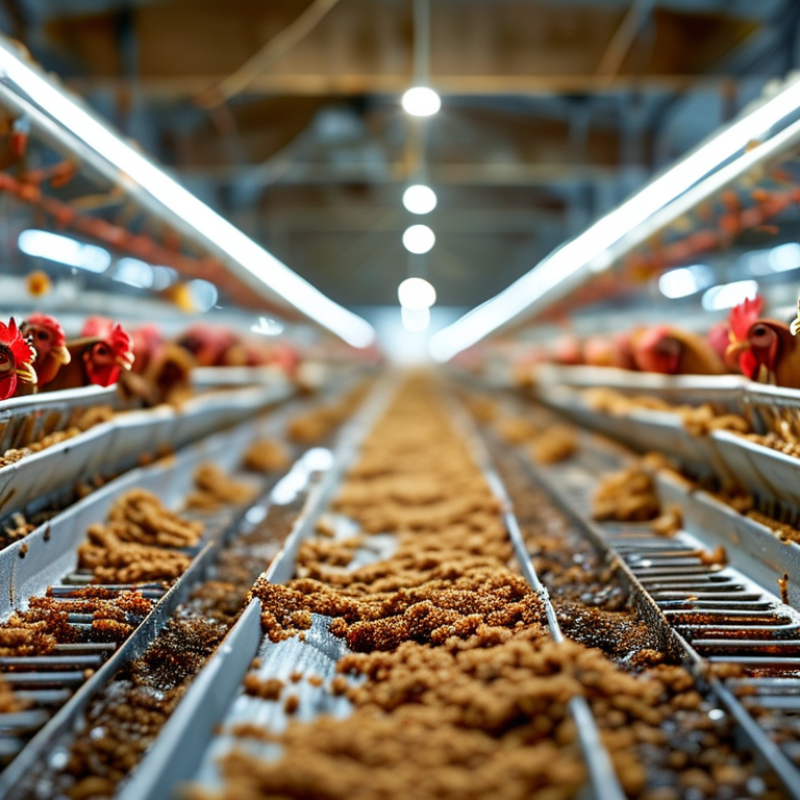
| System Structure | A continuous conveyor belt is installed beneath each cage tier to collect manure as it falls from the cages. | Manure is collected directly at the source instead of accumulating on the house floor. |
| Main Components | Manure belts, drive rollers, support rollers, belt scrapers, tensioning devices, a control panel, and a cross-conveyor or discharge conveyor. | The modular design allows components to be inspected, adjusted, or replaced individually. |
| Working Process | A geared motor rotates the drive roller, moving the belt along the cage row. Manure is carried to the end of the row and transferred to a cross-conveyor or collection point. | The system creates a predictable manure flow and reduces manual handling. |
| Removal Frequency | Common operating schedules range from every 1–3 days, depending on flock size, manure moisture, ventilation, and farm management practices. | Frequent removal can reduce manure accumulation time, odor generation, and fly-breeding opportunities. |
| Belt Material | Industrial-grade polypropylene or polyethylene belts are commonly selected for moisture resistance, flexibility, and cleanability. | Suitable materials help the belt withstand repeated loading, cleaning, and exposure to manure. |
| Belt Width | Typically selected to match the cage-row layout and manure drop zone; many systems use belts approximately 1.0–2.0 m wide. | Correct sizing improves manure capture and helps prevent spillage along the cage row. |
| Moisture Management | Fresh poultry manure commonly contains substantial moisture; ventilation and timely belt removal help promote drying before storage. | Drier manure is generally easier to transport, store, compost, or use as fertilizer. |
| Cleaning Method | A belt scraper removes residual manure from the belt surface as the belt passes around the discharge roller. Periodic washing may also be required. | Cleaner belts reduce carryback, odor, and material buildup around rollers and supports. |
| Labor Requirement | Most routine manure movement is motor-driven; workers mainly perform inspections, cleaning, lubrication, and adjustment. | Automation can reduce repetitive shoveling and improve working conditions inside the poultry house. |
| Energy Use | Power demand depends on belt length, manure load, incline, and conveyor design; small and medium systems commonly use geared motors in the sub-5 kW range. | The system can provide mechanized manure handling without requiring large continuous power loads. |
| Odor and Fly Control | Removing manure at regular intervals limits the time it remains beneath the cages; odor control still depends on ventilation, moisture, and storage management. | A manure belt supports a cleaner house environment but does not replace proper ventilation or waste-storage practices. |
| Manure Transfer | A cross-conveyor can collect manure from multiple cage rows and move it to a side discharge, trailer, composting area, or covered storage location. | Centralized transfer simplifies loading and reduces the number of collection points. |
| Maintenance Checks | Inspect belt alignment, tension, roller condition, scraper contact, motor noise, fasteners, and emergency-stop devices before regular operation. | Routine checks help prevent belt deviation, tearing, blockages, and unplanned downtime. |
| Best-Fit Farm Type | Particularly suitable for cage-based layer houses where manure falls predictably beneath the cages and regular mechanical removal is required. | The system is most effective when cage layout, ventilation, manure storage, and operating schedules are planned together. |



 08045479132
 Send Inquiry

 Send Inquiry
 Send SMS