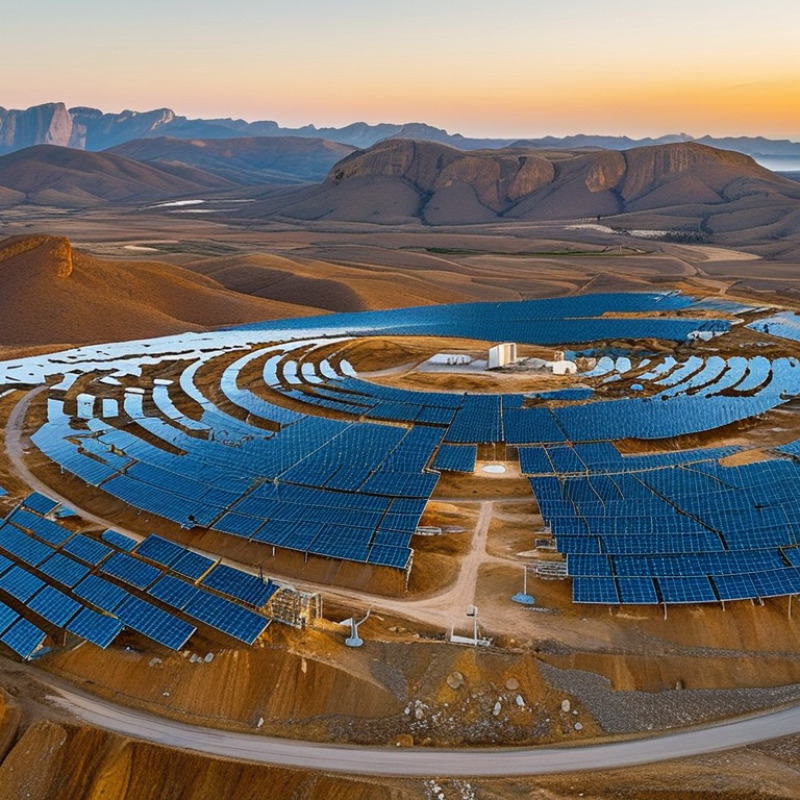
| System Architecture | Large solar fields are commonly divided into repeatable rows, blocks, and electrical sub-arrays. | A modular, distributed layout allows individual rack sections to be installed, inspected, and serviced without interrupting the entire plant. | Useful for phased construction, remote sites, and projects with multiple terrain or grid interconnection zones. |
| Energy Yield | Single-axis tracking can increase annual energy production by approximately 15%–25% compared with fixed-tilt systems, depending on latitude, weather, shading, and layout. | Independent rack sections can support tracker or fixed-tilt configurations according to the solar resource and terrain of each project area. | Supports optimized designs across high-irradiance regions, temperate climates, and areas with seasonal sunlight variation. |
| Land Utilization | Ground-coverage ratio for utility-scale sites commonly falls within about 0.30–0.50, depending on row spacing, tracker geometry, terrain, and access requirements. | Satellite-style blocks can be spaced independently, helping balance power density, access roads, drainage, and shading losses. | Particularly suitable for irregular parcels, agricultural co-use, brownfields, and sites where usable land is fragmented. |
| Terrain Adaptability | Conventional layouts generally require grading or detailed pile and foundation engineering when slopes, rock, or variable soil conditions are present. | Shorter, repeatable rack sections can follow moderate changes in slope and reduce the need to force an entire field into one geometric plane. | Improves design flexibility in mountainous, desert, coastal, and geotechnically variable regions. |
| Bifacial Module Compatibility | Bifacial modules can produce additional rear-side energy, but the gain depends strongly on albedo, row spacing, module height, and ground shading. | Open rack geometry and carefully separated blocks can improve rear-side irradiance and reduce unnecessary obstruction beneath modules. | Well suited to high-reflectance surfaces such as light-colored soil, gravel, snow-prone areas, and selected agricultural sites. |
| Wind and Snow Design | Structural design must follow site-specific wind, snow, seismic, corrosion, and foundation requirements; universal load values are not appropriate. | Smaller rack sections allow load paths, foundations, and stow or tilt strategies to be engineered for local conditions rather than using one configuration across the entire site. | Helpful when a project crosses multiple climate zones or includes coastal, high-wind, heavy-snow, or seismic conditions. |
| Installation Logistics | Utility projects require coordinated delivery of steel, fasteners, modules, electrical equipment, and construction machinery over large areas. | Repeatable rack units can be staged by construction zone, reducing long-distance movement of materials inside the site and simplifying work-package planning. | Benefits projects in remote locations, areas with limited road access, and regions with seasonal construction windows. |
| Operations and Maintenance | Routine activities include vegetation control, torque checks, corrosion inspection, module cleaning where justified, and corrective maintenance. | Sectional layouts make it easier to isolate affected rows or blocks and create clear access routes for inspection and repair. | Can reduce operational disruption when faults or severe weather affect only part of a large solar field. |
| Water and Drainage | Drainage design must account for site runoff, soil infiltration, grading, rainfall intensity, and local environmental requirements. | Distributed rack blocks can preserve natural drainage paths and limit extensive grading when properly integrated with civil design. | Valuable in monsoon climates, flood-sensitive areas, arid regions with erosion risk, and sites with strict stormwater controls. |
| Scalability | Large plants are often built in blocks that can be expanded as transmission capacity, permits, and financing become available. | A standardized rack concept can be replicated across additional blocks while allowing local adjustments for soil, slope, wind, and module configuration. | Supports multi-stage development programs and geographically distributed renewable-energy portfolios. |
| Design and Compliance | Racking, foundations, electrical interfaces, and installation practices must be verified against applicable structural, electrical, fire, and environmental requirements. | Modular design enables repeatable engineering documentation while retaining site-specific checks for loads, corrosion, seismic conditions, and foundations. | Facilitates adaptation to different national codes, permitting conditions, and climate zones without assuming identical site parameters. |



 08045479132
 Send Inquiry

 Send Inquiry
 Send SMS